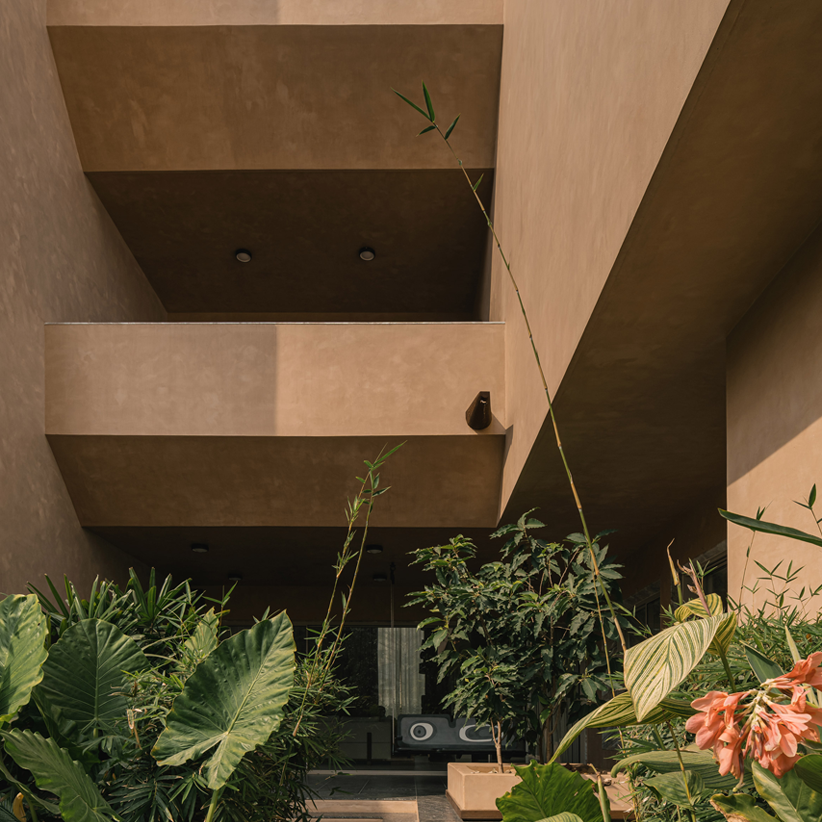
The works of architects Le Corbusier and Balkrishna Doshi influenced Amaltash, a residence in Gujarat, India, designed by multidisciplinary studio Design ni Dukaan.
The 12,000-square-foot (1,115-square-metre) house is located in the town of Navsari, which experiences extreme heat in the summer.
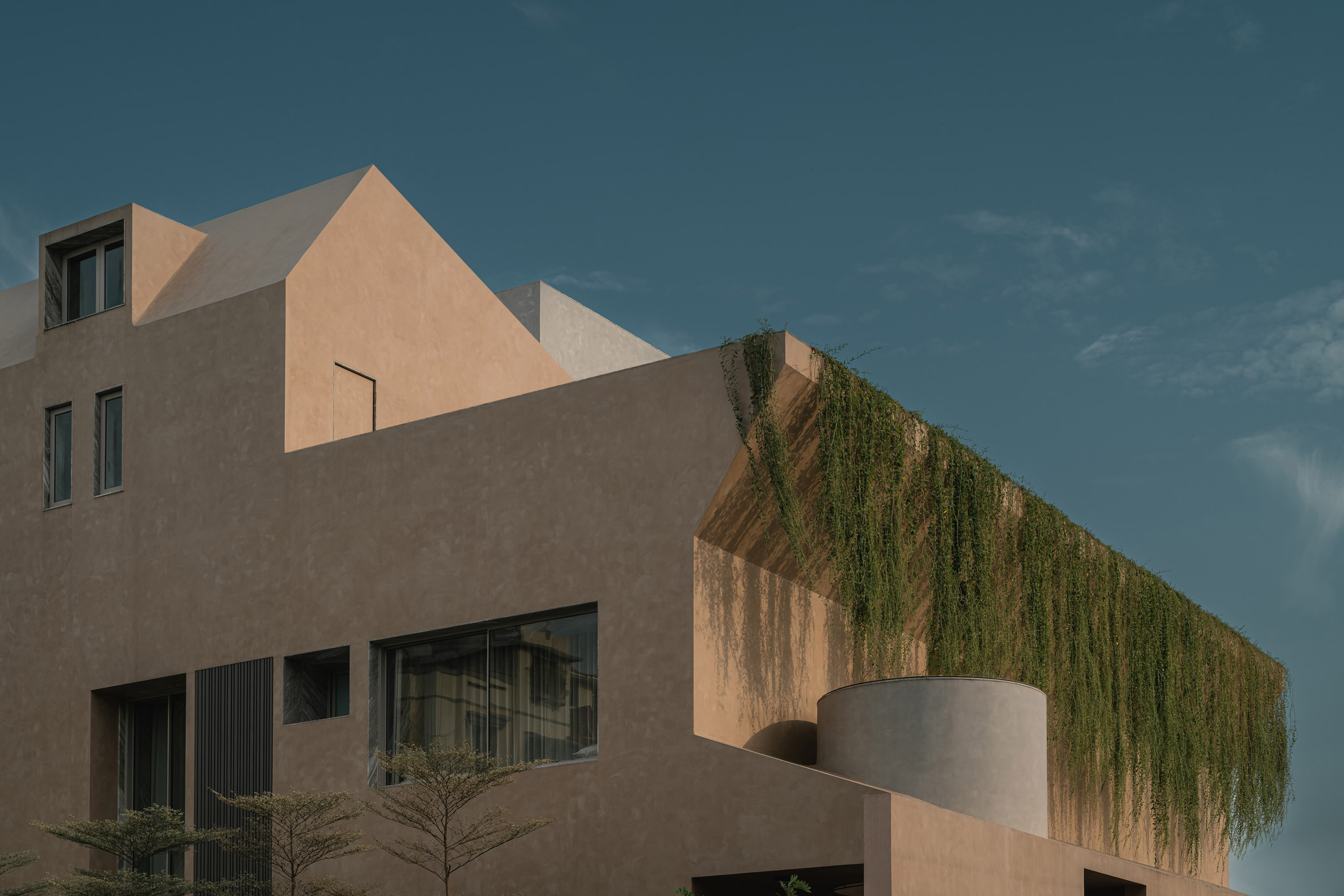
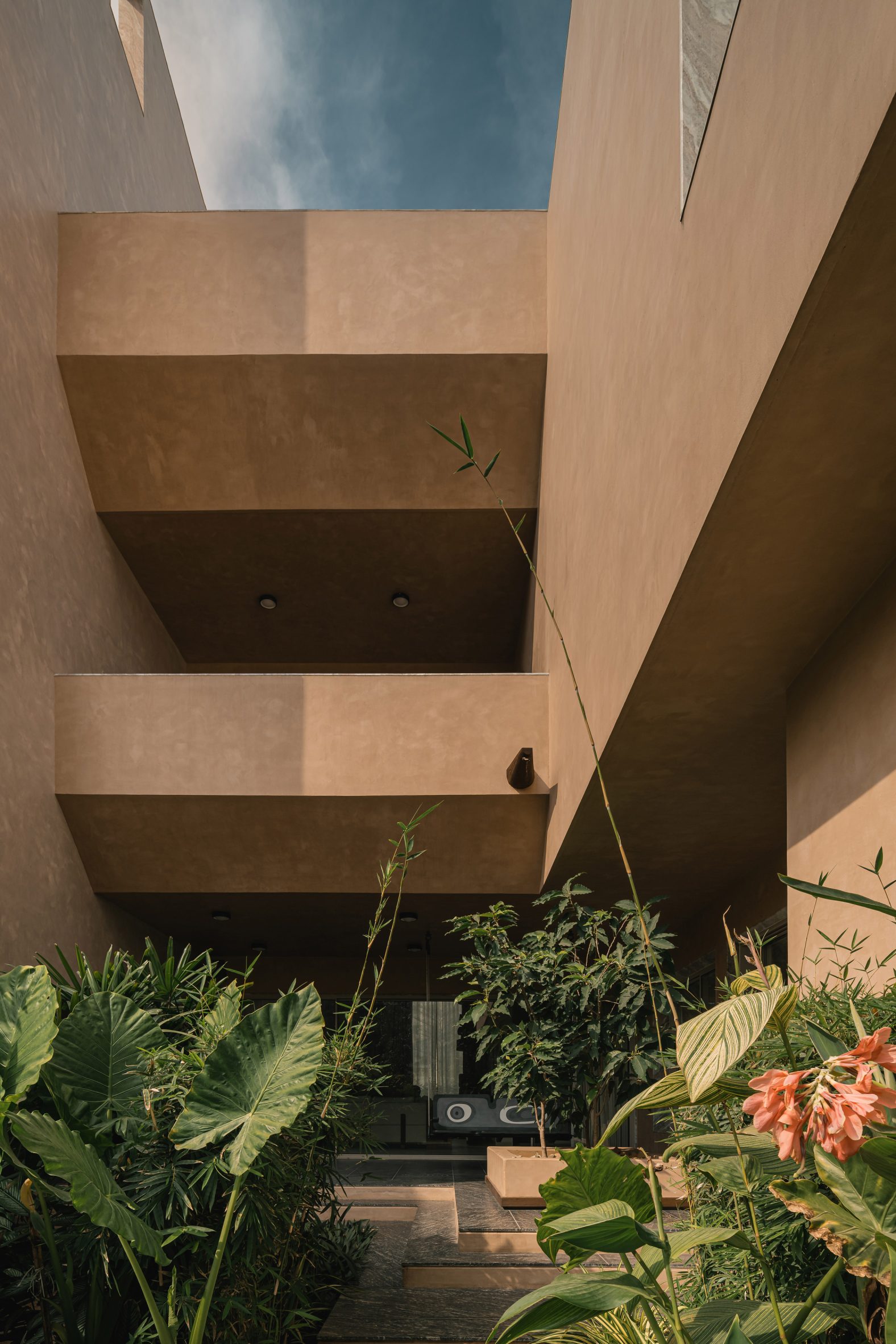
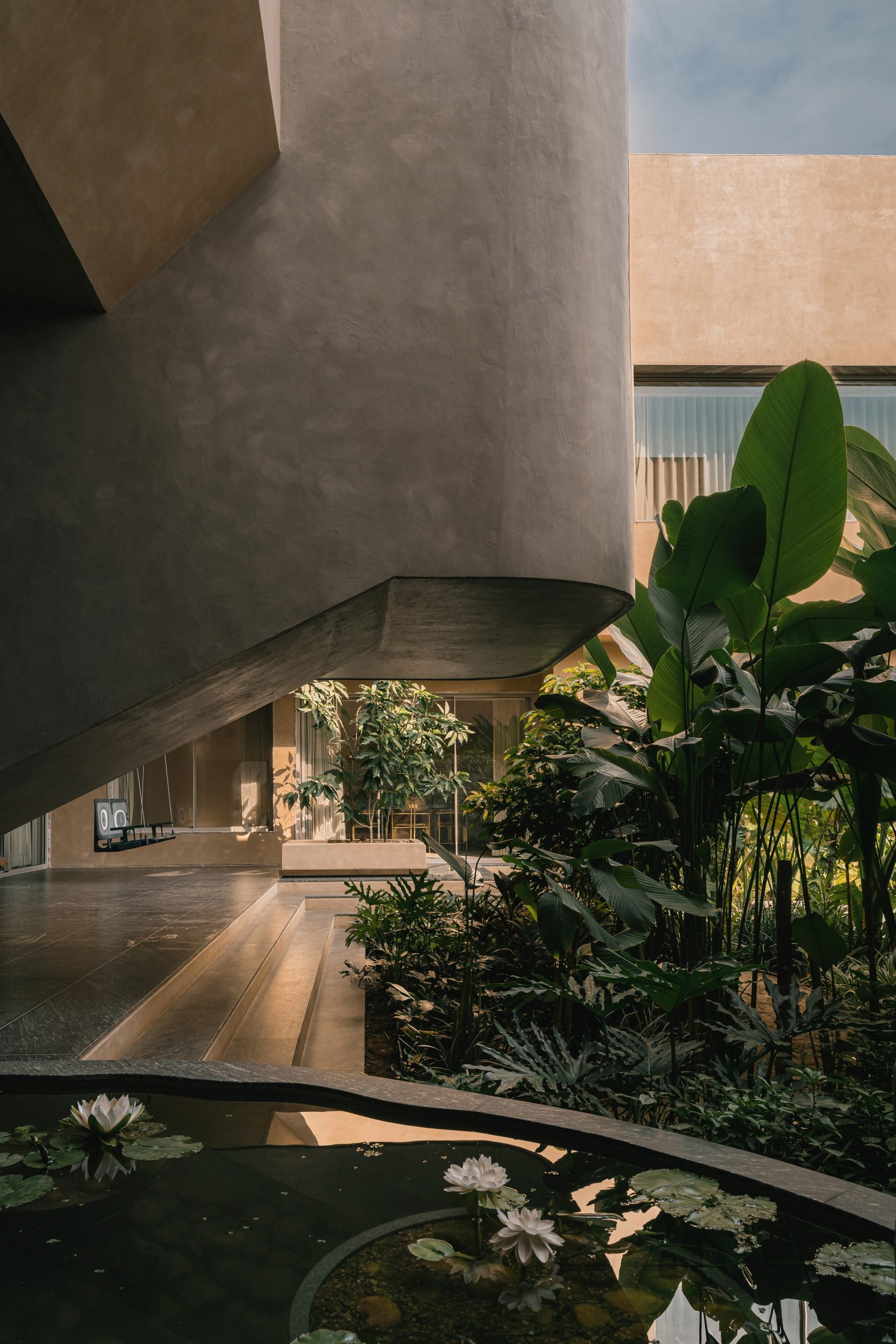
To help combat this, Design ni Dukaan planned a landscaped courtyard on the south-west corner of the plot to protect the interiors from the harsh south sun.
The three-storey house’s living spaces are located in beige-coloured geometric blocks that hug the courtyard.
This aspect of the design was informed by Design ni Dukaan founder Veeram Shah’s interest in modernist architecture.
“The geometric form of the residence comes from [Shah’s] strong foundation in modernist architecture, a design approach shaped by influences like Le Corbusier, Balkrishna Doshi and through his mentor Girish Doshi,” Design ni Dukaan explained.
It was also important to the client that the design complied with the traditional Indian spatial planning principles of Vastu Shastra, which aims to integrate architecture with nature.
“We approach [Vastu Shastra] as a spatial and environmental logic, but often encounter highly specific, sometimes rigid client expectations at a granular level,” Shah told Dezeen.
“Rather than treating these constraints as limitations, we see them as opportunities to push the design further,” he added.
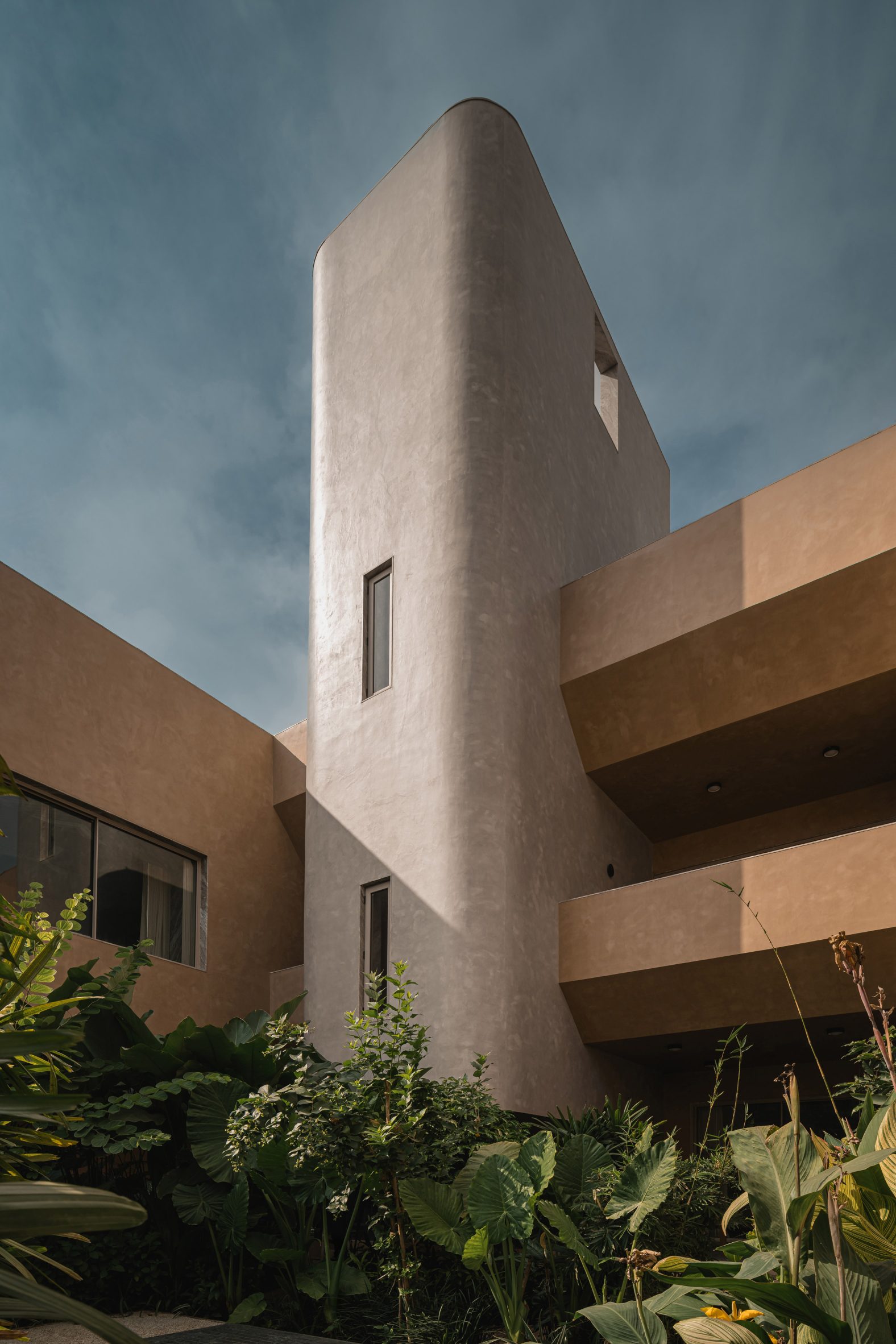
Amaltash’s facade was clad in Dholpuri, a bespoke exterior finish devised on-site by the studio.
“We felt the exterior needed a texture that was more tactile, something that embraced a sense of controlled imperfection,” Shah commented.
“Through a series of hands-on experiments with our polishing team, this led to the development of a bespoke, in-house finish that we now refer to as Dholpuri,” he continued.
As well as the central courtyard, the studio added a patio between the courtyard and the interior spaces to further reduce the glare of the sun.
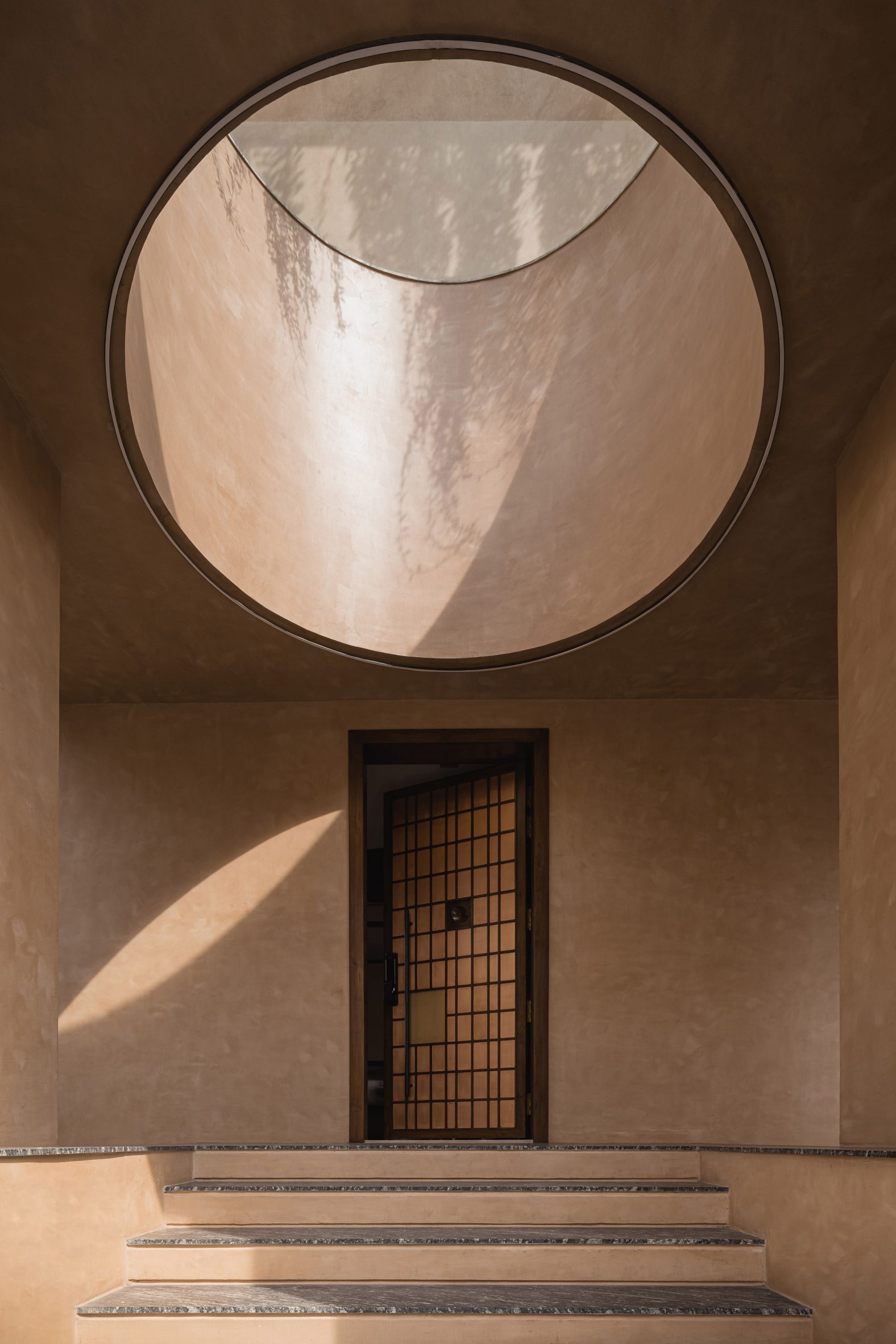
On the north west corner of the plot, an entrance porch topped with a void carved leads into the formal and informal living spaces, which spill out onto the patio.
Tucked away beyond the living spaces is the mandir, or worship room, nestled in the corner of the house. This is followed by a guest room, dining area, two kitchens and a pantry.
A towering grey-toned block hovering above the living room patio houses the staircase leading up to the first and second floors.
On the first floor, the staircase is flanked by a pair of bedrooms on one side and a piano lounge, multipurpose room and another pair of bedrooms on the other.
The second-floor terrace tops the house, complemented by a spacious rooftop wellness lounge.
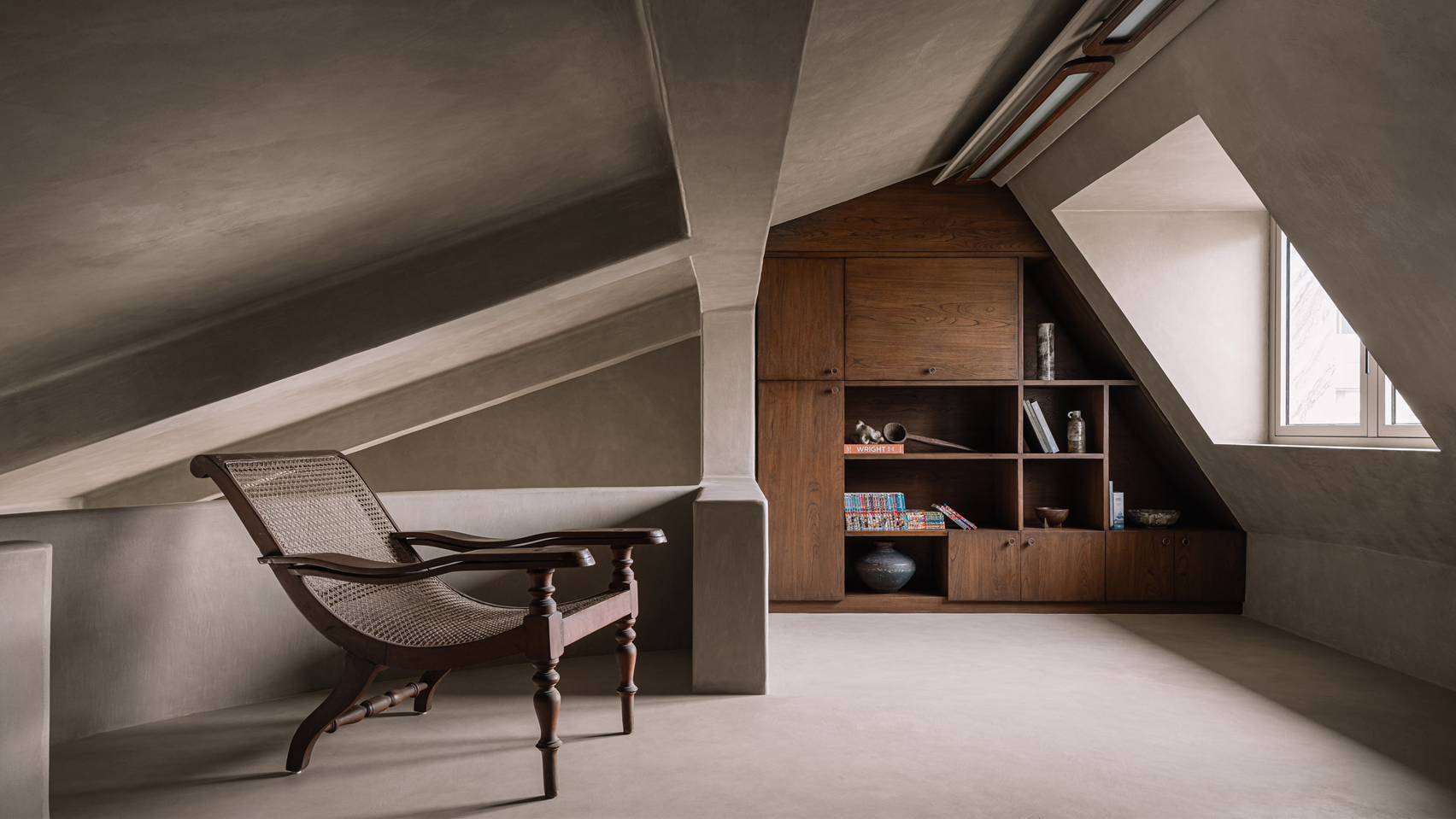
A curved staircase from the lounge leads to an attic-like mezzanine – a byproduct of the slope created to install solar panels on the house’s roof.
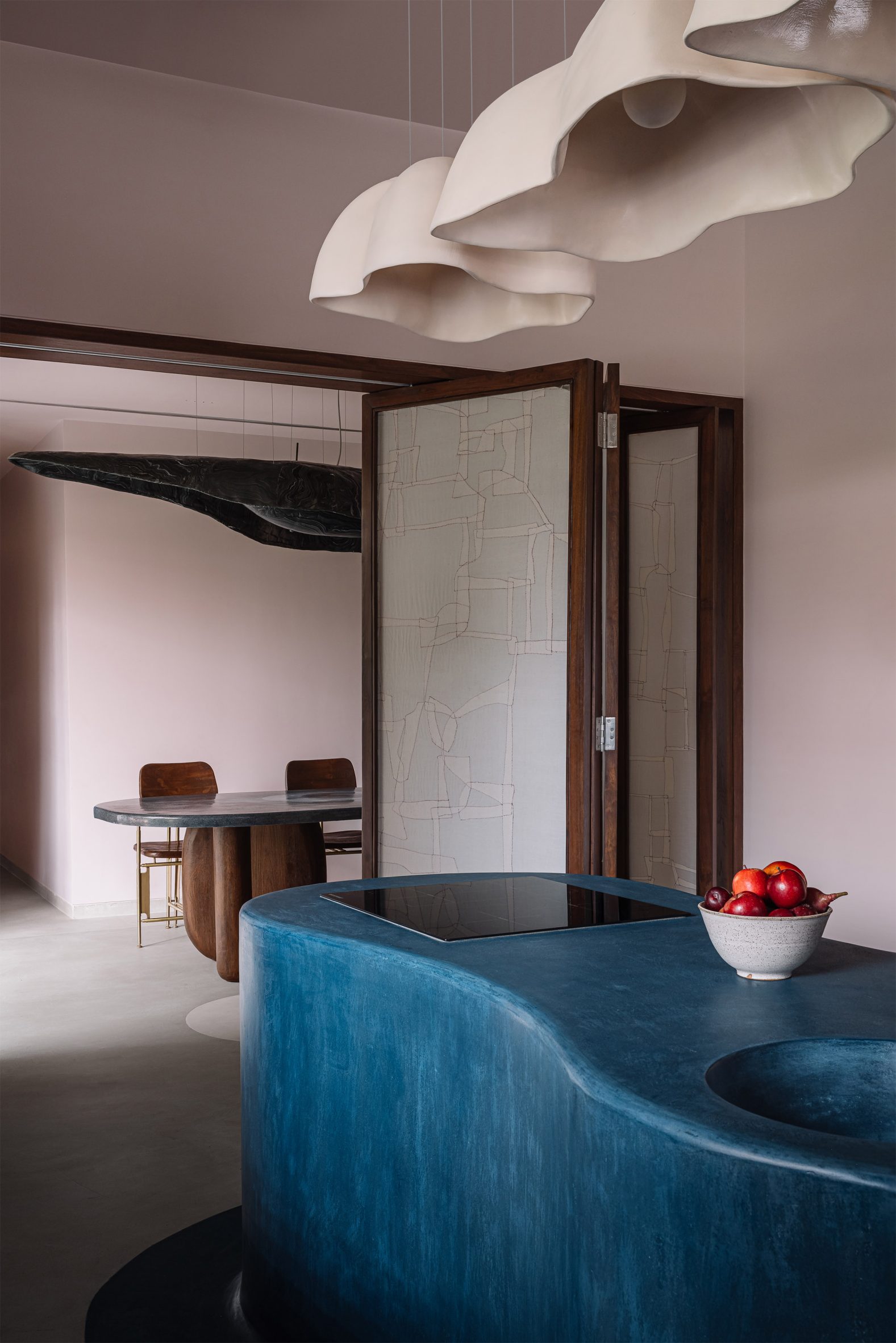
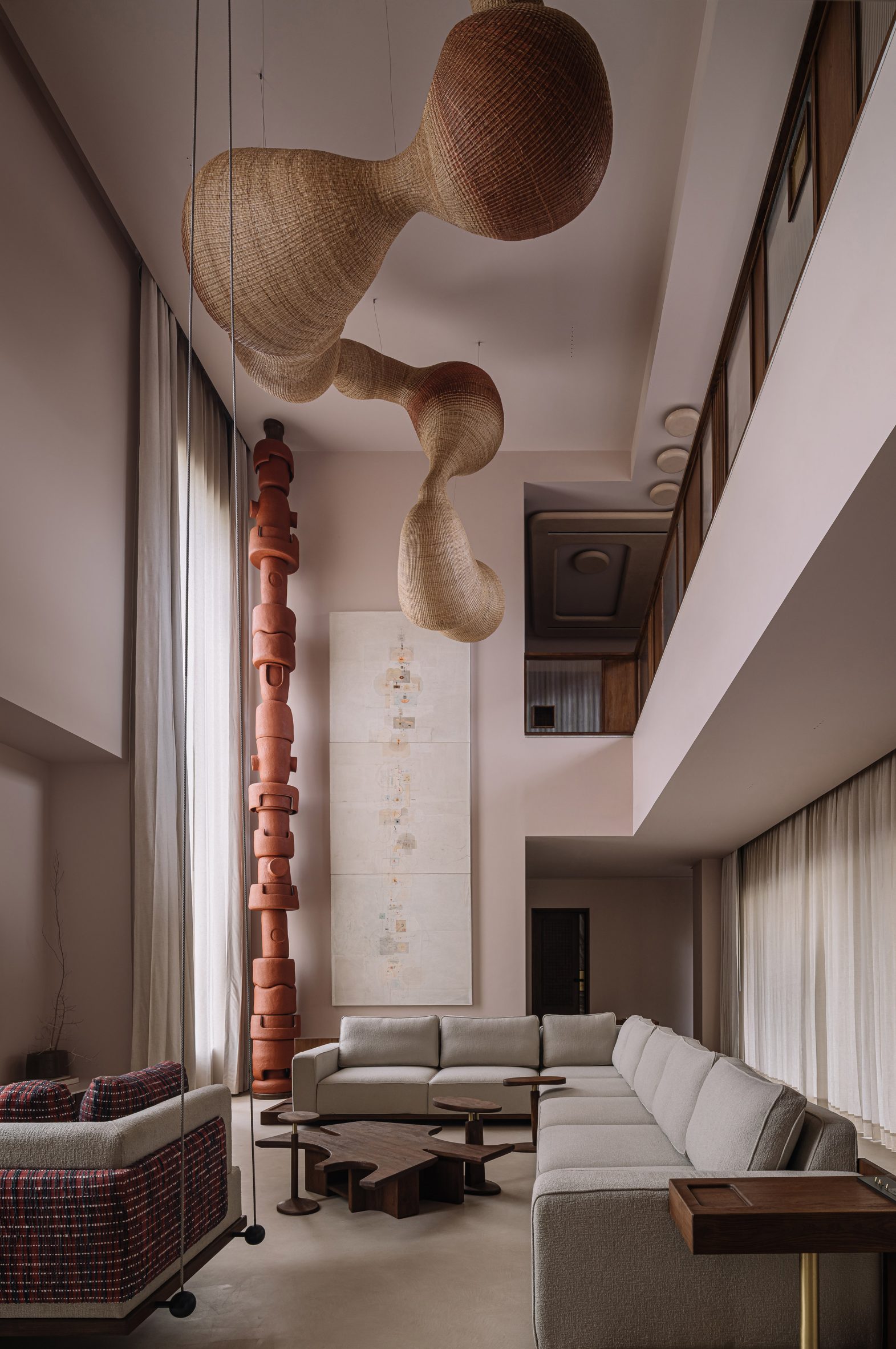
The interiors of the residence are characterised by neutral tones and tactile surfaces, paired with bespoke furniture created by Design ni Dukaan in its signature teak and brass finishes.
The studio filled the residence with furniture, fittings and installations sourced from various craftspeople and designers across India, including emerging designers.
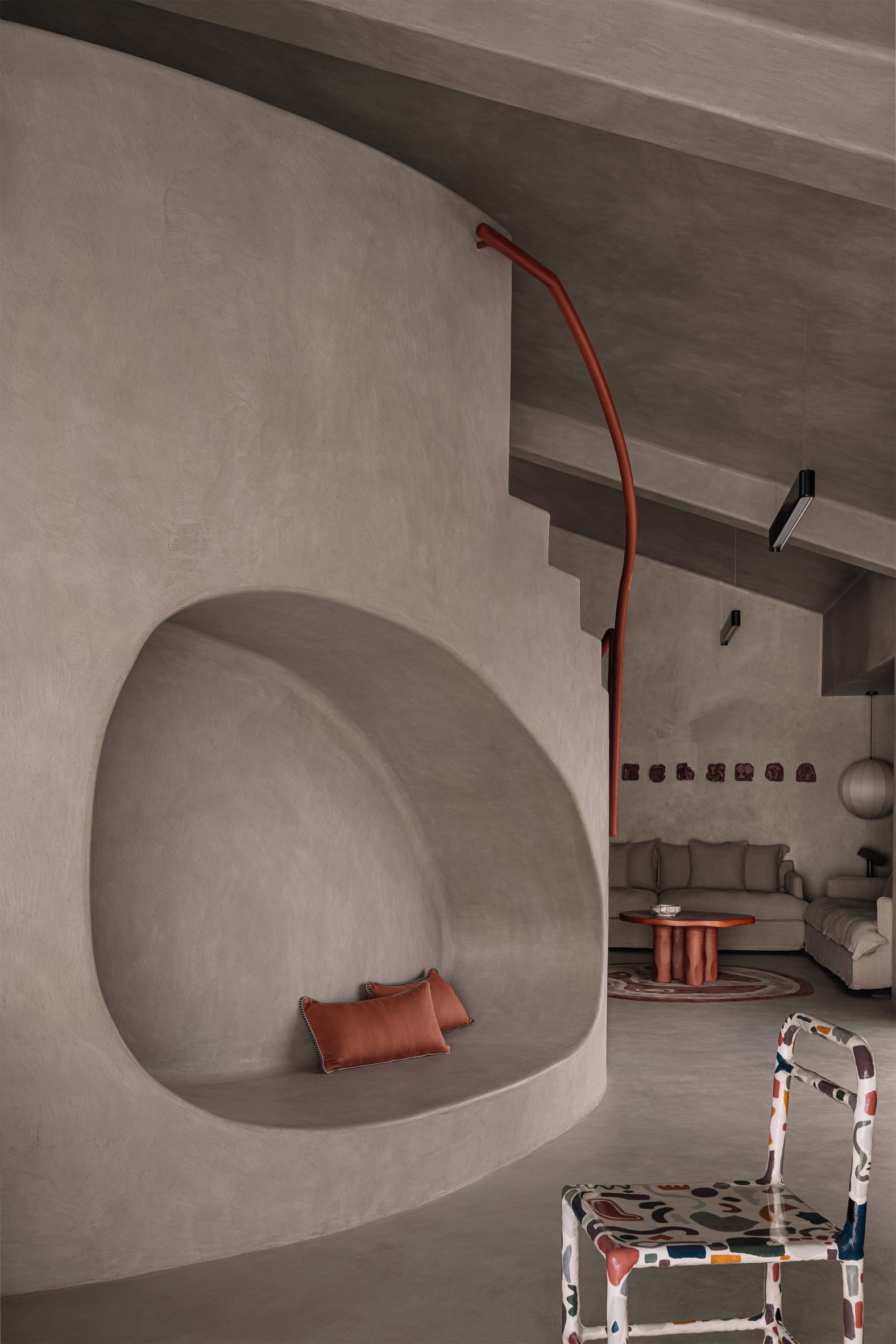
“We have tried to work with a lot of young product, light and textile designers and even artists in this project, which has helped us create a stronger, ever-growing design community that thrives and supports each other,” the studio explained.
Pieces include an undulating wicker installation hanging over the living area by The Wicker Story and a double-height terracotta-toned standing lamp resembling a totem created by Harshita Jhamtani.
Outside, Design ni Dukaan collaborated with landscape designers Sanyogita Gaikwad and Soham Changediya to fill the courtyard with a variety of native plants and platforms for seating.
Elsewhere in Gujarat, Indian office Iksoi Studio remodelled a former factory into its new HQ and Studio Naqshbandi completed a spiritual education hub surrounded by rainwater harvesting ponds.
The photography is by Ishita Sitwala.
Project credits:
Principal architect: Ar Veeram Shah
HVAC consultants: Anjaria Associates
Structural consultants: MSquare Architects
Plumbing Consultant: Techno Engineers
Contractor: Sarjan Construction and Project Management
The post Design ni Dukaan references Corbusier and Doshi for geometric Gujarat house appeared first on Dezeen.