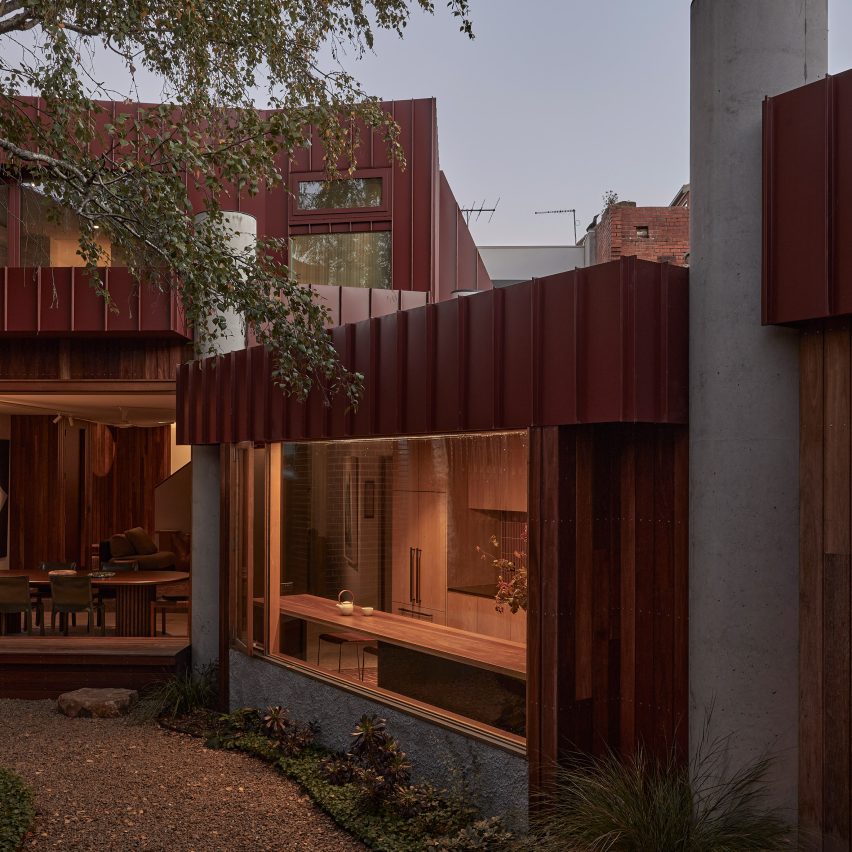
Australian studio MRTN Architects has completed Laneway House in Melbourne, extending a Victorian terrace with a “collage” of forms in red-toned brick, metal and timber.
Located in the suburb of Carlton, the home sits within a network of Victorian laneways, where homes present traditional frontages to the street and back onto alleyways defined by an accretion of small-scale extensions, outbuildings and sheds.
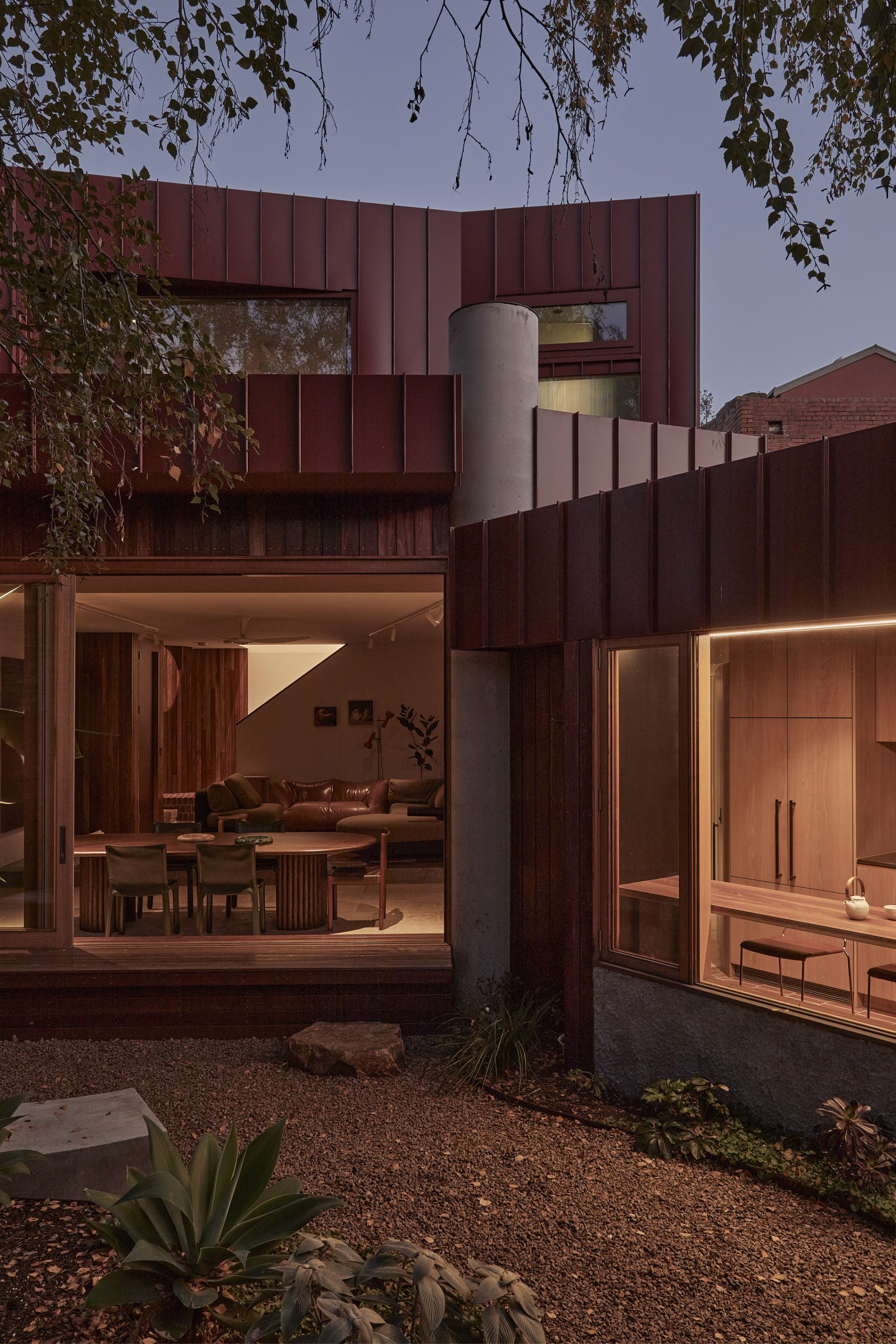
Tasked with expanding the existing home, MRTN Architects added a cluster of volumes at the end of its garden, finished in a mixture of red brick, timber and metal that nods to the hotchpotch character of the neighbouring alley.
“We conducted a deep dive study and photographic survey of the various approaches people had taken when adding on to their homes that backed onto bluestone laneways over the decade,” MRTN Architects director Antony Martin told Dezeen.
“This study informed a collage approach to the design of both material and form,” he added.
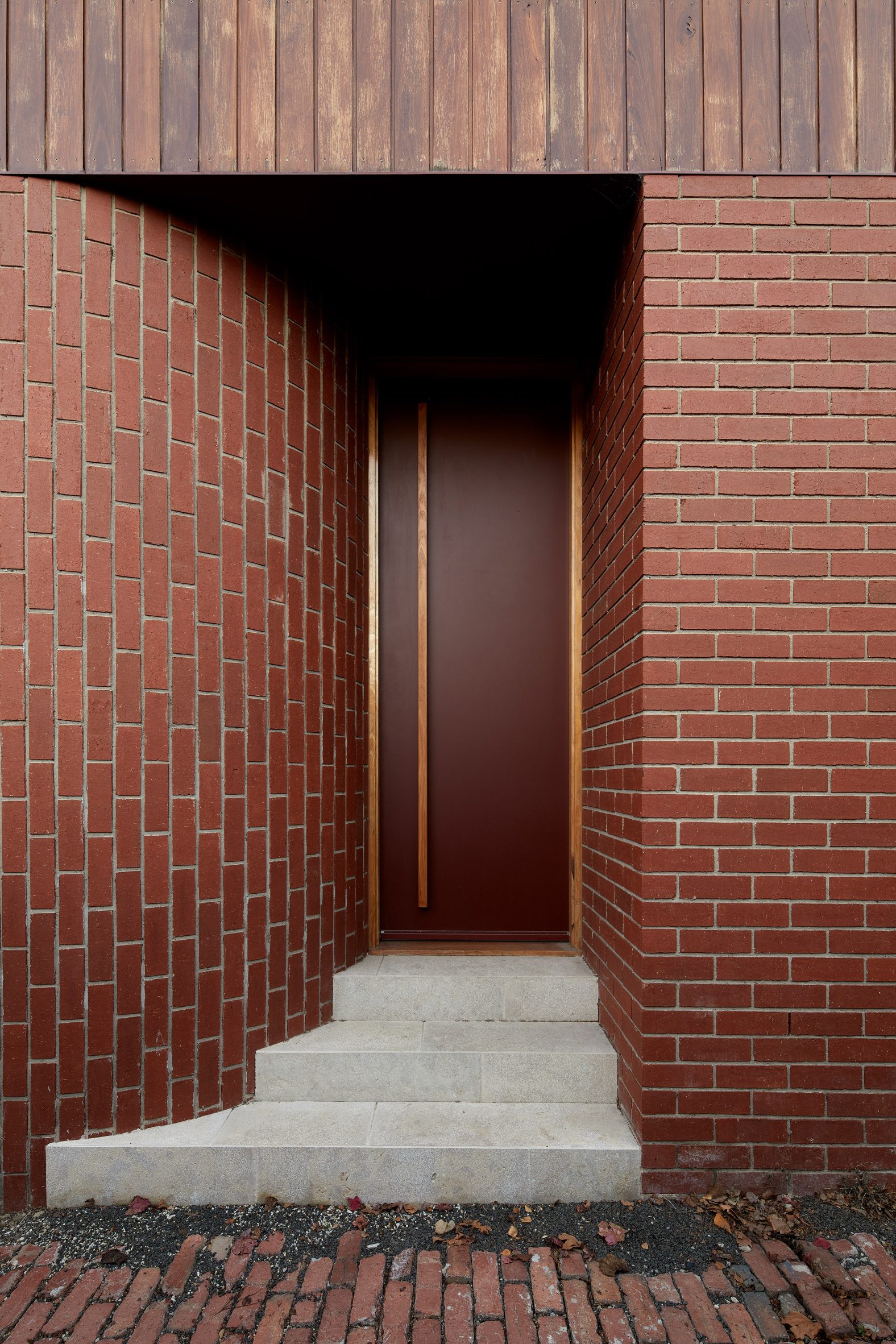
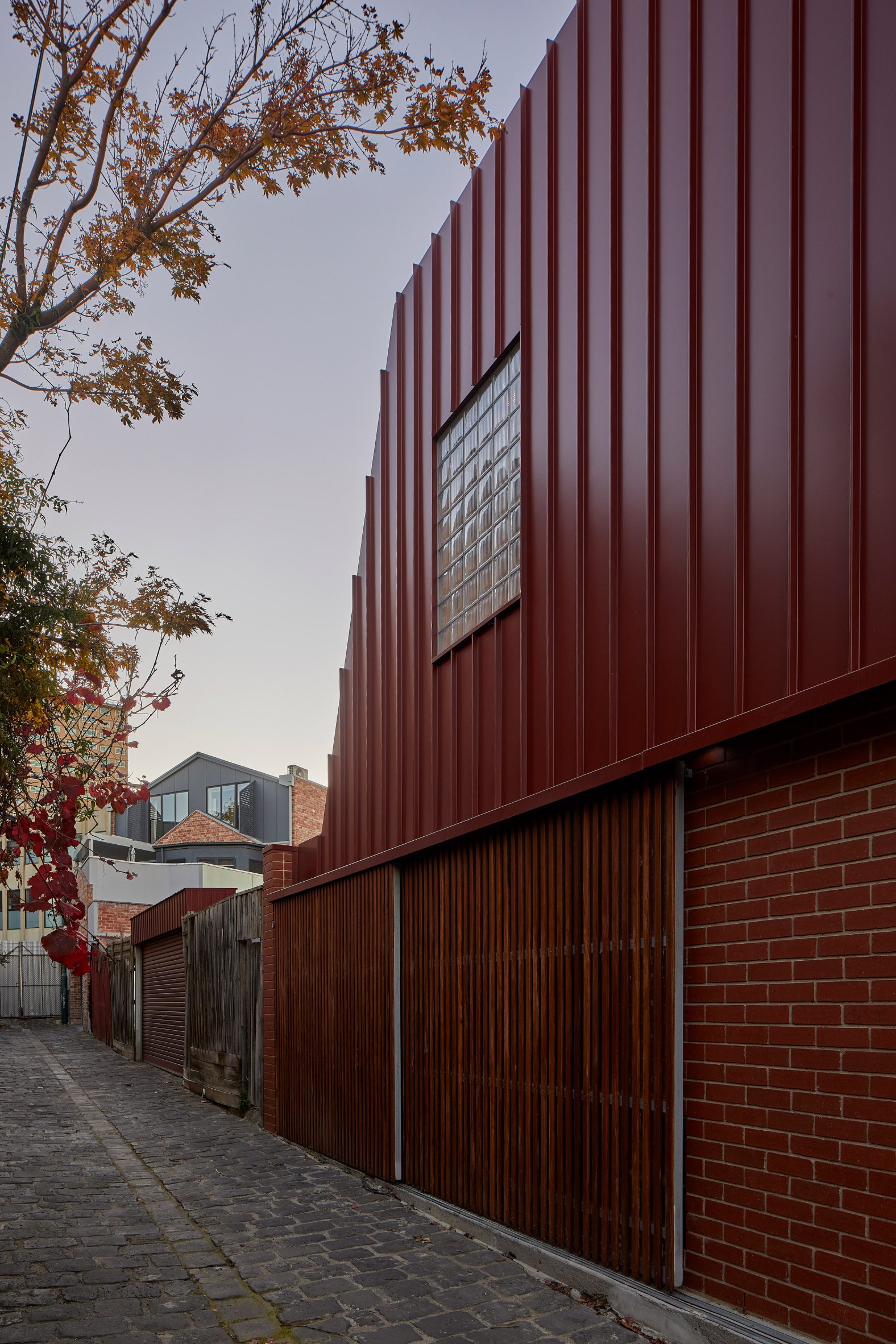
The extension addresses the laneways with a central two-storey volume that has its own dedicated entrance and garage.
This allows it to act as a separate residence, with a view to accommodating future changes in living arrangements and allowing for ageing-in-place.
Atop a red-brick base with a curved corner, this two-storey volume contrasts deep red standing-seam metal cladding to the south with timber planks to the east.
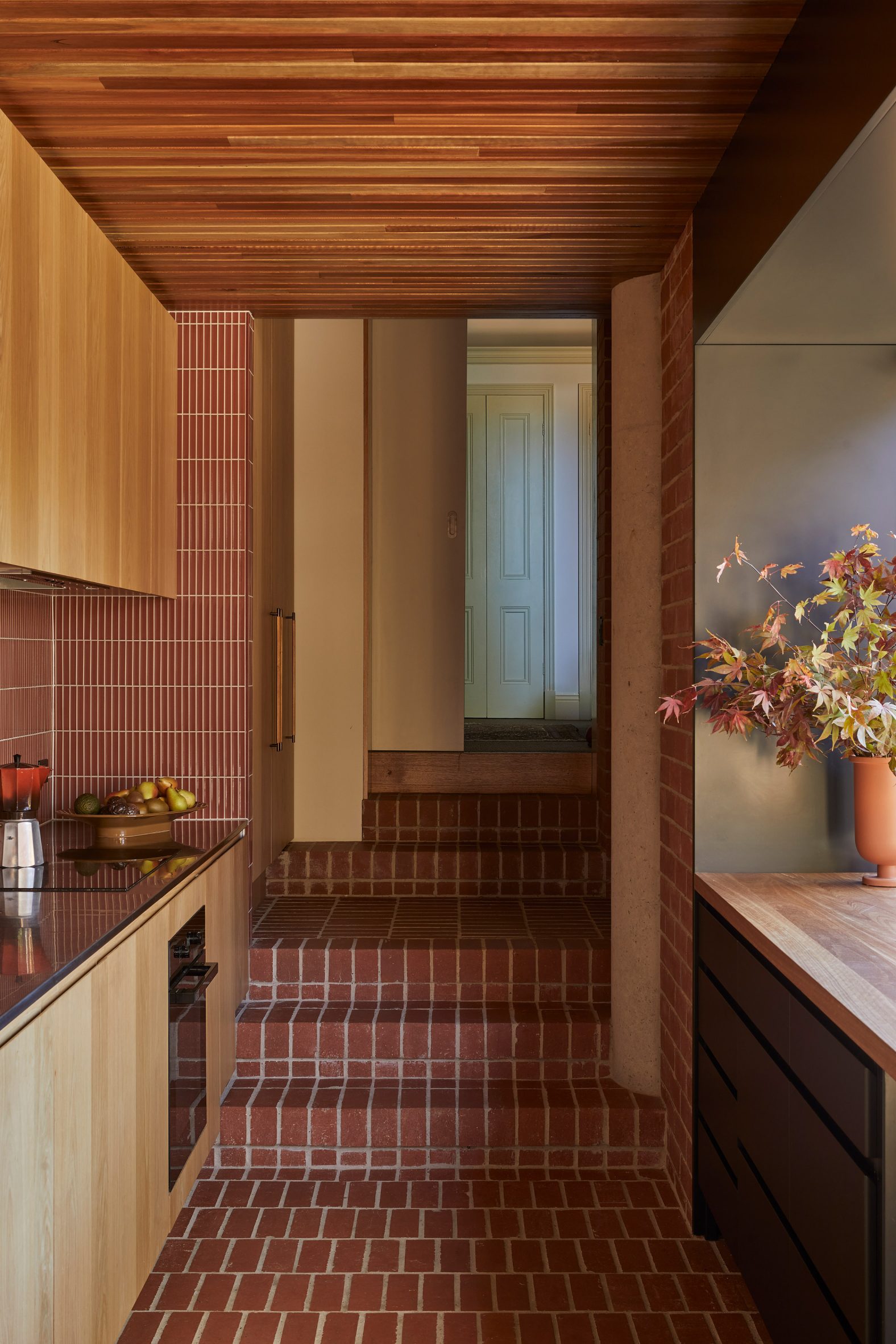
Laneway House’s taller entrance volume steps down towards the existing home to the north, to which it connects via a skinny galley kitchen enveloped in brick tiles and bookended by two chunky concrete columns.
This single-storey volume appears to pivot around one of these columns, forming two arms that hug a central garden overlooked by a timber bench-like windowsill beneath full-height sliding doors.
“Space was very tight on the site; therefore, the corridor connection between the new and old also doubles as the kitchen,” Martin said.
“A green sanctuary space sits at the heart of the design. This calm, green space, enclosed on all sides by built form, is accessible from the old house, the kitchen and the new living and dining spaces,” he added.
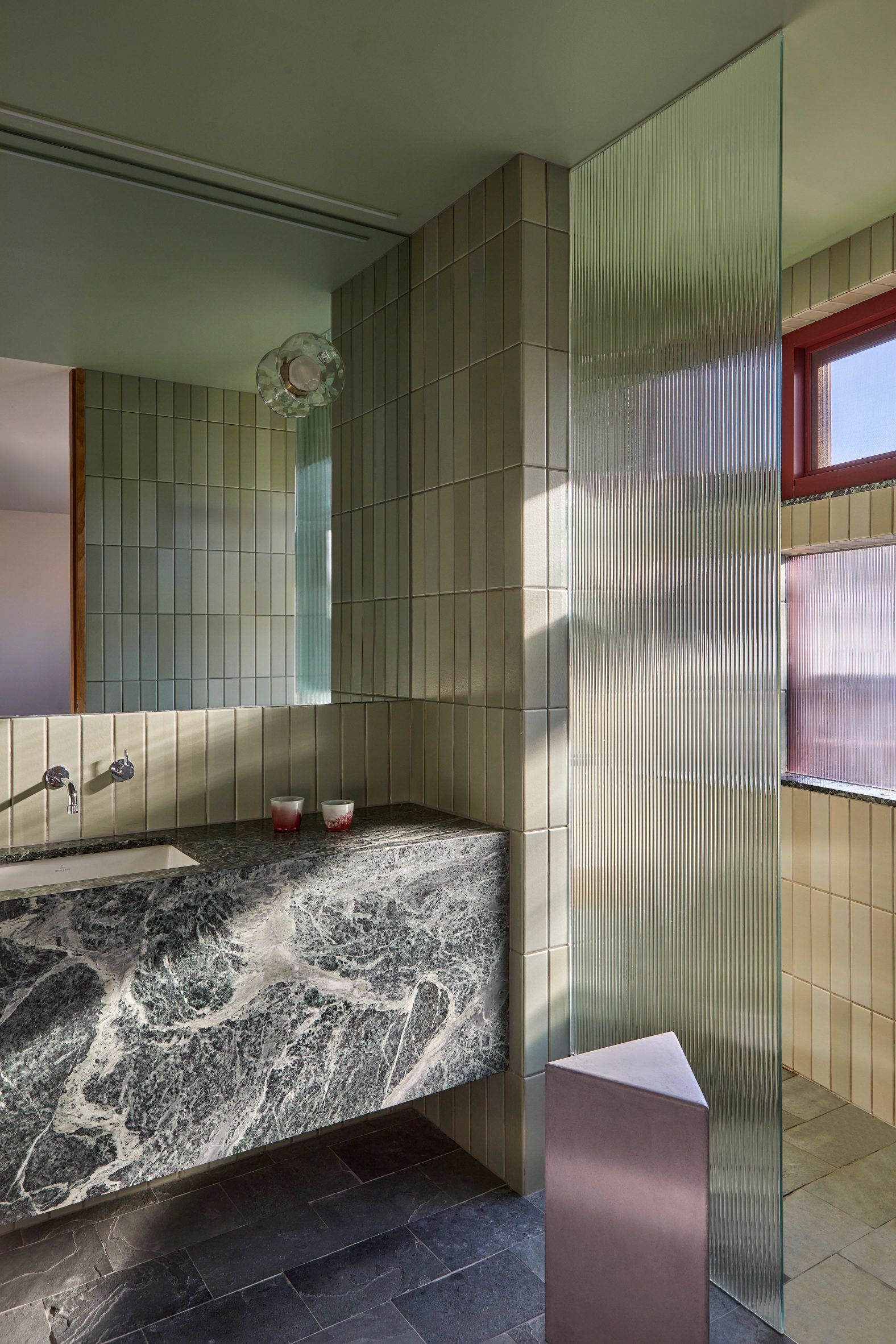
An ensuite bedroom and study are positioned on the first floor of the extension, benefitting from northern daylight and views across the laneways.
While the ground floor has a more robust feel with paved stone floors, timber ceilings and exposed concrete and brick walls, the upper rooms are finished with white walls and paler timber carpentry.
Martin founded MRTN Architects in Melbourne in 2011. Previous projects by the studio include a new-build home in the suburb of Fairfield, which it fronted with a courtyard wrapped by blockwork walls.
Elsewhere in Melbourne, Studio Bright recently created a house wrapped in metal screens for climbing plants and Jos Tan completed a compact residence with a pared-back, pale-brick form.
The photography is by MRTN Architects.
The post MRTN Architects extends Melbourne home with cluster of red-brick volumes appeared first on Dezeen.