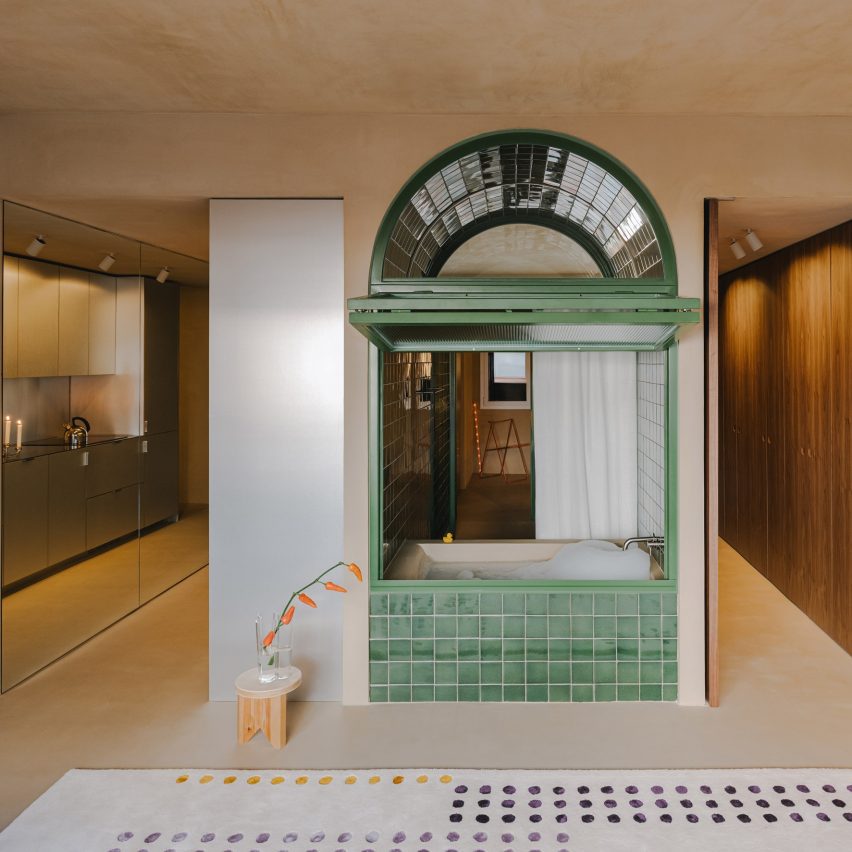
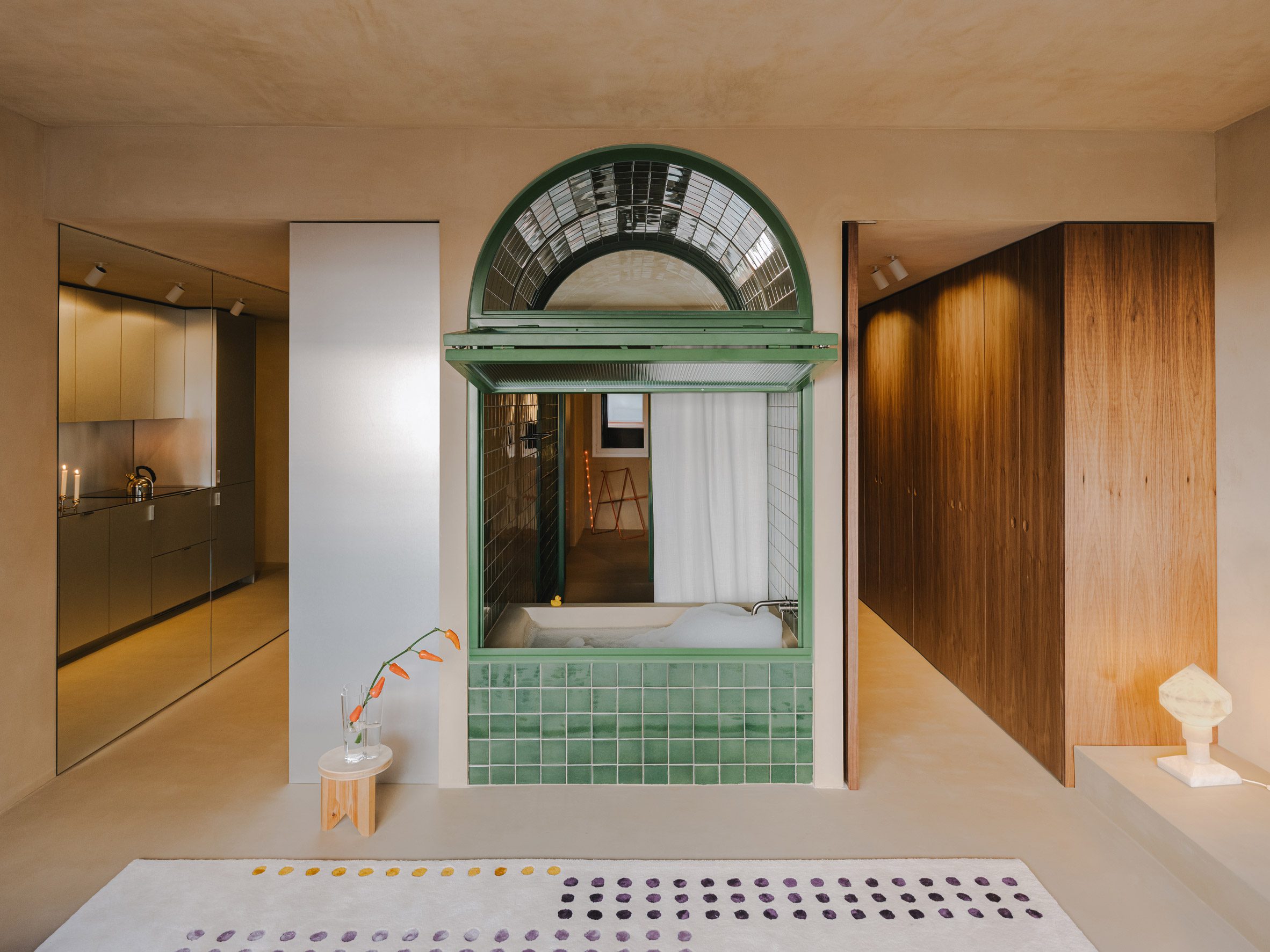
A green-tiled bathtub overlooks the living room inside this 59-square-metre apartment in Barcelona, designed by architecture practice Sigla Studio as a “continuous domestic landscape”.
Located in the city’s Turó Park neighbourhood, the apartment was renovated for a client who wanted an open, spacious environment with plenty of natural light where she could live alone while also accommodating guests.
“We wanted to explore how domestic boundaries could become softer, more ambiguous and reversible – we questioned why the kitchen has become socially integrated while other functions, particularly the bathroom, still remain hidden,” Sigla Studio co-founder Bernat Riera told Dezeen.
“Rather than organising the home as isolated rooms connected by circulation, we imagined it as a continuous domestic landscape where bathing, cooking, dressing, resting and socialising could coexist without hierarchy.”
Sigla Studio organised the layout around a central core containing the bathroom, kitchen and dressing room, positioned to allow natural light, views and ventilation throughout the space.
Completed using a material palette of ceramics, wood and aluminium, this functional core connects the open-plan living area to a more contained bedroom at the opposite end of the apartment.
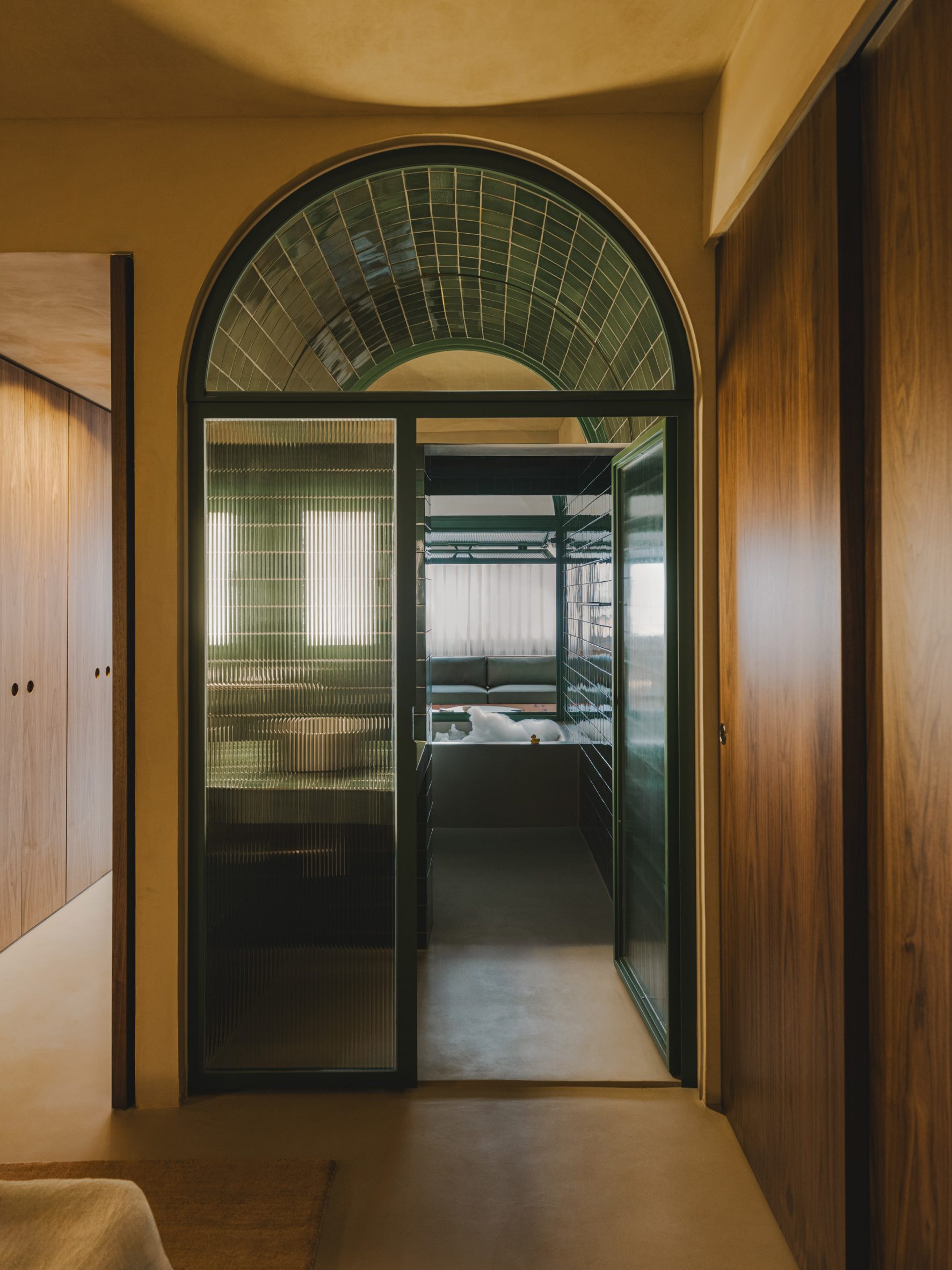
Designed to blur the boundary of public and private space within the home, the bathtub is integrated into the living room, complete with a motorised pivoting window system that allows it to be closed off when needed.
Green glazed ceramic tiles by local manufacturer Cerámica Ferrés line the bathing area, including an arched ceiling feature intended to create a “more immersive and almost cavernous quality,” said Riera.
“We wanted bathing to become part of everyday life, rather than something completely hidden away,” he continued.
“From the bathtub, the client can receive natural light, look out towards the living room, watch a film or talk with someone sitting on the sofa, instead of being isolated inside a closed room.”
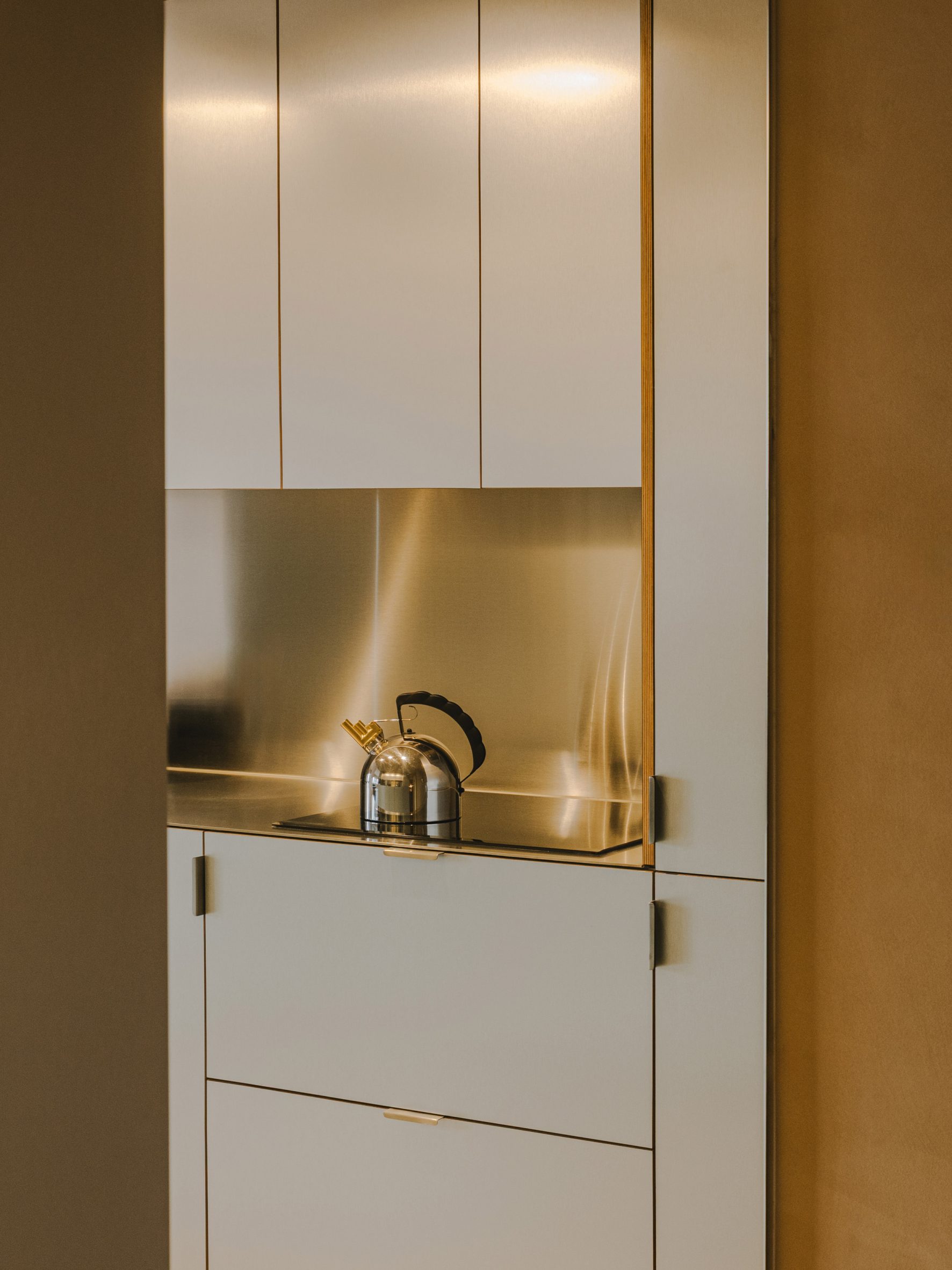
The three functional spaces at the centre of the apartment were completed with distinct material palettes.
“Materiality was important because we wanted each part of the central core to have its own atmosphere and identity,” said Riera.
“While the bathroom becomes brighter and almost liquid through green ceramic tiles, the kitchen is colder and more reflective through its plywood and aluminium surfaces, and the dressing room is darker, warmer and more tactile through the use of walnut wood.”
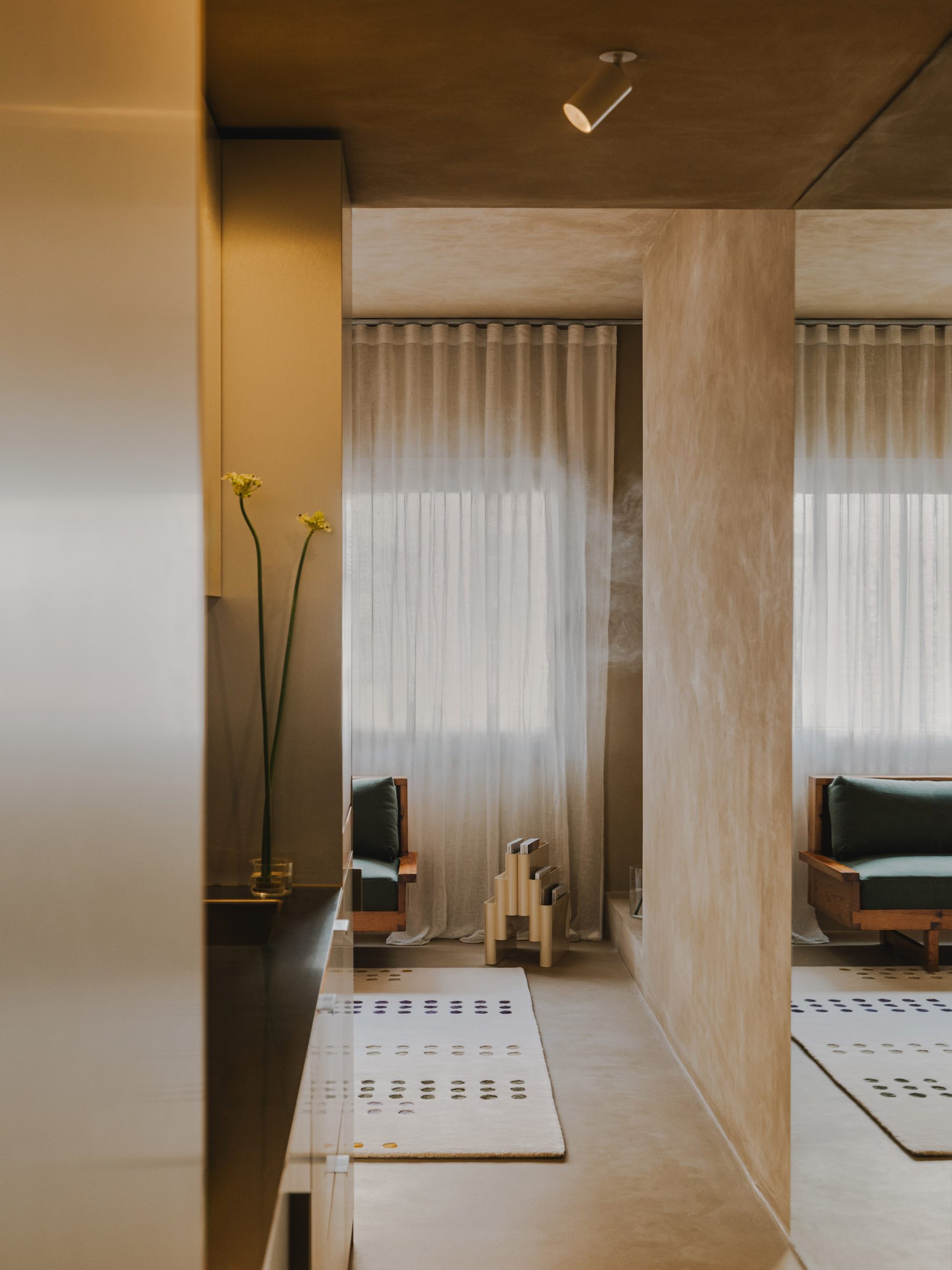
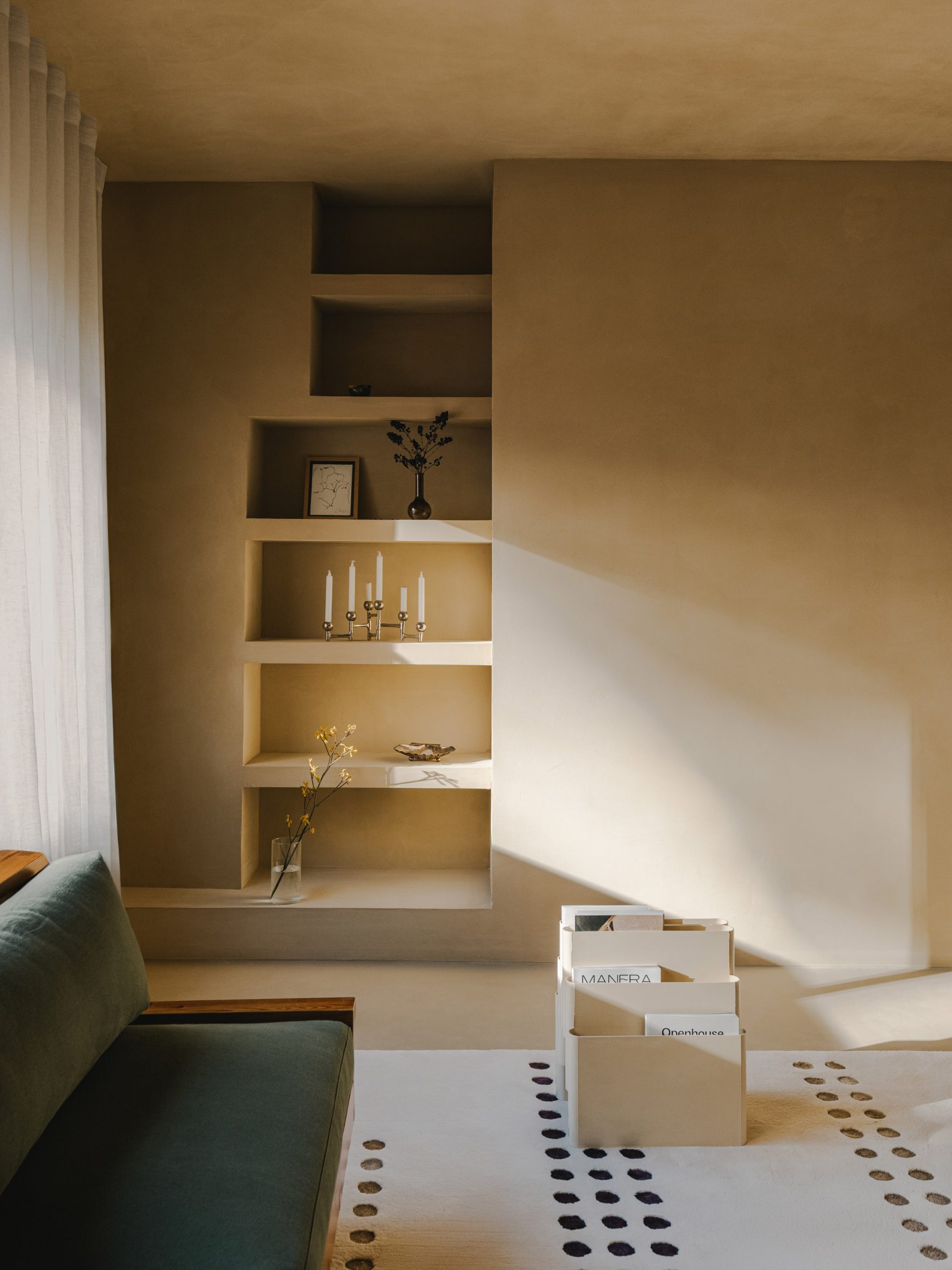
In contrast, the apartment’s perimeter is finished in one continuous mineral coating, applied across the walls, floors and ceilings to blur the distinction between surfaces.
“The perimeter behaves almost like a neutral shell – soft mineral surfaces, diffuse lighting and warm matte tones,” said Riera.
“In a relatively small apartment, continuity became a spatial tool – the fewer interruptions between materials and surfaces, the more open and connected the space feels.”
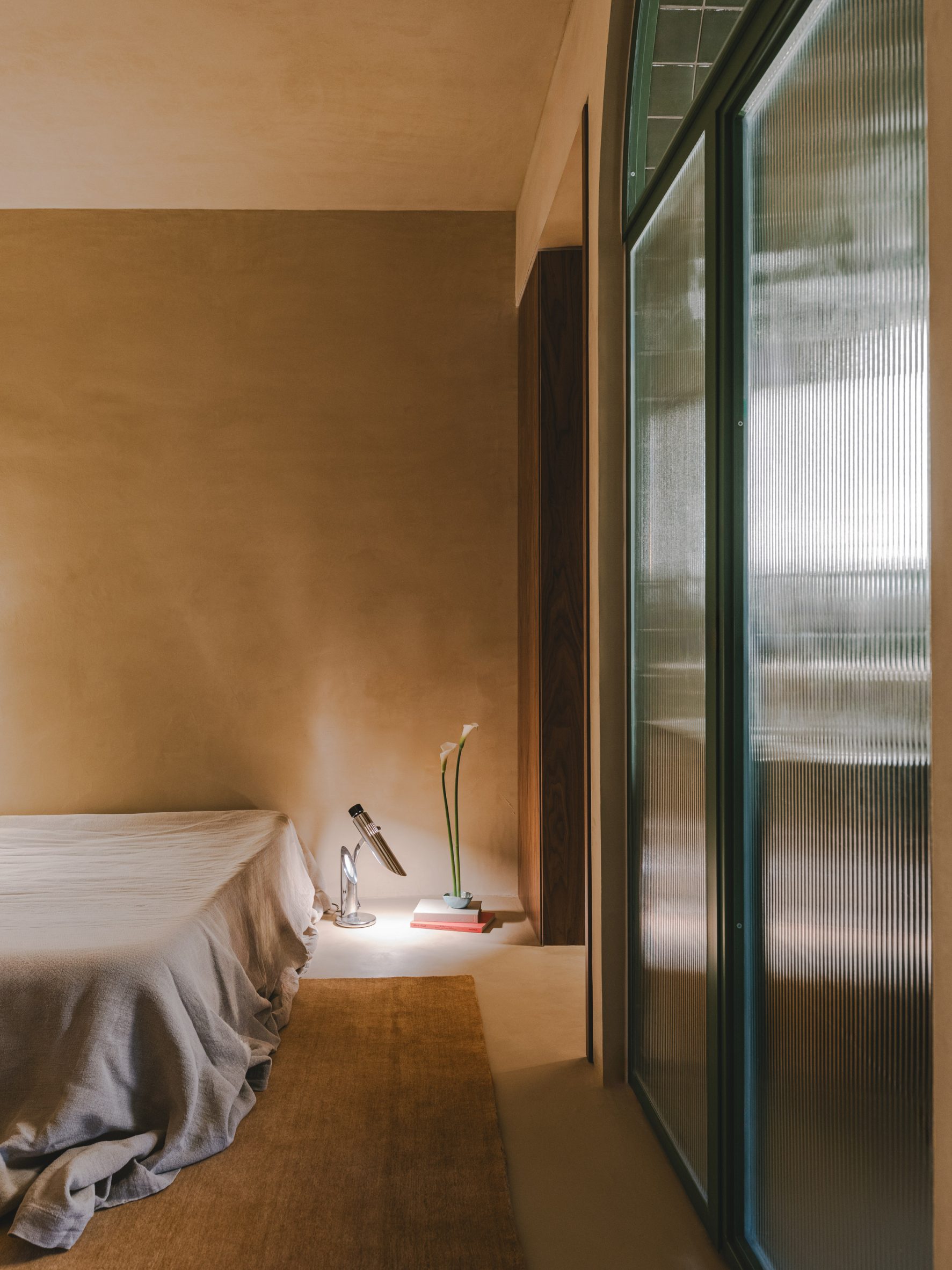
Sigla Studio worked with Barcelona-based gallery Fenix Originals to introduce restored vintage furniture and lighting pieces from the 1960s to 1980s, with a focus on local Spanish and Catalan designers.
Other Barcelona projects recently featured on Dezeen include a corrugated metal-clad home on steel stilts by Jaime Prous Architects and Pineda & Monedero and a contemporary art gallery located inside Antoni Gaudí’s Casa Batlló.
The photography is by Marta Vidal.
The post Bathtub takes centre stage in living room of Barcelona apartment appeared first on Dezeen.