A new architecture movement tied to the tough realities of the profession is establishing itself in the UK and beyond, writes Nat Barker.
Even as the world seems to unravel, a few certainties in life endure: death, taxes, and white men unilaterally codifying architectural movements.
In recent weeks on Dezeen, we’ve been exploring one particularly bold and divisive example: Patrik Schumacher’s parametricism, which he has famously diagnosed (and prescribed) as the defining architectural style of the 21st century. Schumacher, of course, is just one in a series of XY-chromosomed caucasians to have had a go over the years – Charles Jencks, Philip Johnson and Bevis Hillier spring to mind.
Over the past few years, the Stirling Prize has been dominated by gentleist buildings
And now, please indulge me while I audaciously – and perhaps inadvisedly – throw my own hat into the ring, with a fresh bid to define an architectural style that has emerged over the past decade. I am calling this style “gentleism”.
Gentleism holds that buildings should make a modest contribution to their surroundings. They do not try to hide themselves, but nor do they attempt to dominate. They want to say something new, but say it respectfully.
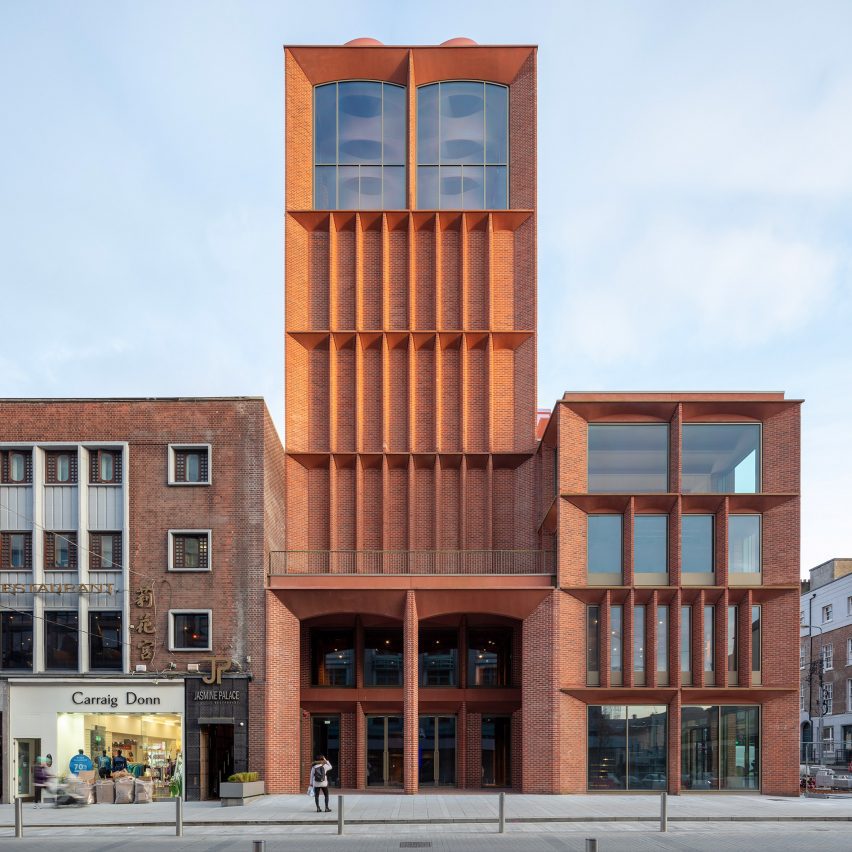
This basic philosophy manifests itself in the form of subtle aesthetic flourishes: bespoke window frames; pleasingly textured brickwork; shapes that are interesting and contemporary-feeling but somehow familiar; scale that exudes a sort of serene gravitas.
Among the architects whose work clearly exemplifies these ideas is this year’s RIBA Royal Gold Medal laureate, Niall McLaughlin. In an interview with Dezeen, he articulated the gentleist approach remarkably neatly.
“It’s not a dialogue of subservience,” he said. “It’s a conversation with peers. You put your building beside theirs and hope that the two of them will glow together, and you hope that somebody in the future will come and do the same for you. It’s that sense of a kind of continuity of performance across time, much more so than this idea of the unique bauble, or the unique shiny artefact.”
Gentleism is establishing itself across Europe and further afield, but has a particularly strong base in the UK. Over the past few years, the Stirling Prize shortlist has been dominated by gentleist buildings. Last year’s winner, the Appleby Blue Almshouse social housing complex in London by Witherford Watson Mann Architects, is a clear example.
The term “gentleism” implies an antithetical relationship to brutalism
As was the 2023 winner, Mae Architects’ John Morden Centre. With its perforations and tactile surfaces, even the Elizabeth Line, which took the prize in 2024, bears some of the hallmarks of gentleism – particularly when compared to the brooding drama of the Jubilee Line extension.
Various RIBA prizes have also gone to other gentleist buildings in the recent past – Henley Halebrown’s 333 Kingsland Road, Mikhail Riches’ Goldsmith Street and, for a rural example, Izat Arundell’s Caochan na Creige in the Outer Hebrides.
What’s behind the emergence of this new movement? I think there are multiple factors.
Readers may have observed that the term “gentleism” implies an antithetical relationship to brutalism, the love-it-or-hate-it, concrete-heavy strain of modernism mostly associated with the 1960s and ’70s.
Poor old brutalism. As most people interested in architecture know, but most people not particularly interested in architecture (ie most people) don’t know, brutalism didn’t actually take its name from the word “brutal”, but the French term for raw concrete, “béton-brut”.
Not that this nuance really matters in the popular imagination. For many people, brutalist architecture is essentially inhumane. It is undeniably the most widely reviled of all the styles – and if you don’t believe that, then you need to start hanging out with more people who aren’t architects.
Some may baulk at the notion that architecture should seek to be universally liked
I see gentleism as partly a response to this – not so much brutalism itself, which I’m sure many gentleist architects would seek to defend – but how it plays with the general public today.
Some may baulk at the notion that architecture should seek to be universally liked. But for architects practising in 2026, it’s a necessary consideration.
Recently established concerns about the embodied carbon in buildings means that designing structures to stand the test of time has become an imperative. It’s become a cliche to say that in order to be retained, buildings must be loved. But for the architect, that’s a tricky assignment.
How can you know what people will love in several decades’ time? Gentleism is the logical response to this conundrum: something that feels kindly and sturdy, which doesn’t necessarily stick out, but would have an impact if taken away.
The embodied carbon issue works on another level, too. As Edwin Heathcote identified in a piece for Dezeen listing the challenges facing the profession today (there are lots), architects are afflicted by a cloying sense of guilt about the environmental impact of their work. When you feel that building in the first place is necessarily a regrettable act of ecological aggression, you are disinclined to design something with the boldness that drove Marcel Breuer or Ernö Goldfinger.
It’s not just a brutalism thing, of course. That same bombastic confidence ran through the veins of the modernists more generally, and the postmodernists after them, and the deconstructivists and the parametricists.
It is now laughable for architects to regard themselves as an elite group
Underpinning this confidence was a belief in the status of the architect as belonging to a cultural elite. That belief made it natural for architects to use the city as a canvas for their artistic experimentation.
But reverence for the creative disciplines has since faded. Smartphones and social media mean that in the 2020s, everyone’s a creative – at the very least, a photographer and a curator.
The status of architects in particular has changed. Poorly paid and bullied by clients and contractors, it is now laughable for architects to regard themselves as an elite set positioned to decide what’s best for the rest of us – that has become the preserve of the tech barons.
Within this context, the notion of designing something “iconic” feels ridiculous, like a humble village baker who insists on only producing five-tier cakes adorned with buttercream roses.
Some might argue that gentleist architecture is boring. To those who have followed the discipline for a long time, the transition in ambition from creating something awe-inspiring to creating something merely pleasant may feel like a depressing downgrade.
But while the origins of gentleism might seem a little sad, the movement itself is a positive thing. For one, it is delivering some genuinely lovely buildings – the awards success of gentleism is no coincidence. But additionally, it is helping to foster a renewed enthusiasm for socially conscious architecture that, in turn, we can hope will make buildings work better for everybody.
There are early signs that it’s working
There is another positive aspect. In an interesting recent piece, the architecture writer Samuel Hughes, generally critical of modern buildings in ways I suspect many ordinary people likely empathise with, took a walk down Victoria Street in London.
“What have we learnt on our walk?” he concluded. “The standard narrative that British architecture had a precipitous visual decline in the twentieth century is, as usual, vindicated. But we have also seen signs of recovery. The architecture of the last ten years shows inconsistent but sometimes striking improvement in respect of planning and massing, and some more tentative improvement in respect of materials and detailing.”
If Hughes thinks this, others will too. And so if the gentleists dare to hope – consciously or otherwise – that by introducing buildings that make a modest contribution to the world architects may gradually regain respect and prominence, there are early signs that it’s working.
Nat Barker is the features editor of Dezeen.
The photo, showing the International Rugby Experience in Limerick by Niall McLaughlin Architects, is by Nick Kane.
Dezeen In Depth
If you enjoy reading Dezeen’s interviews, opinions and features, subscribe to Dezeen In Depth. Sent on the last Friday of each month, this newsletter provides a single place to read about the design and architecture stories behind the headlines.
The post “An architectural style has emerged that I’m calling ‘gentleism'” appeared first on Dezeen.