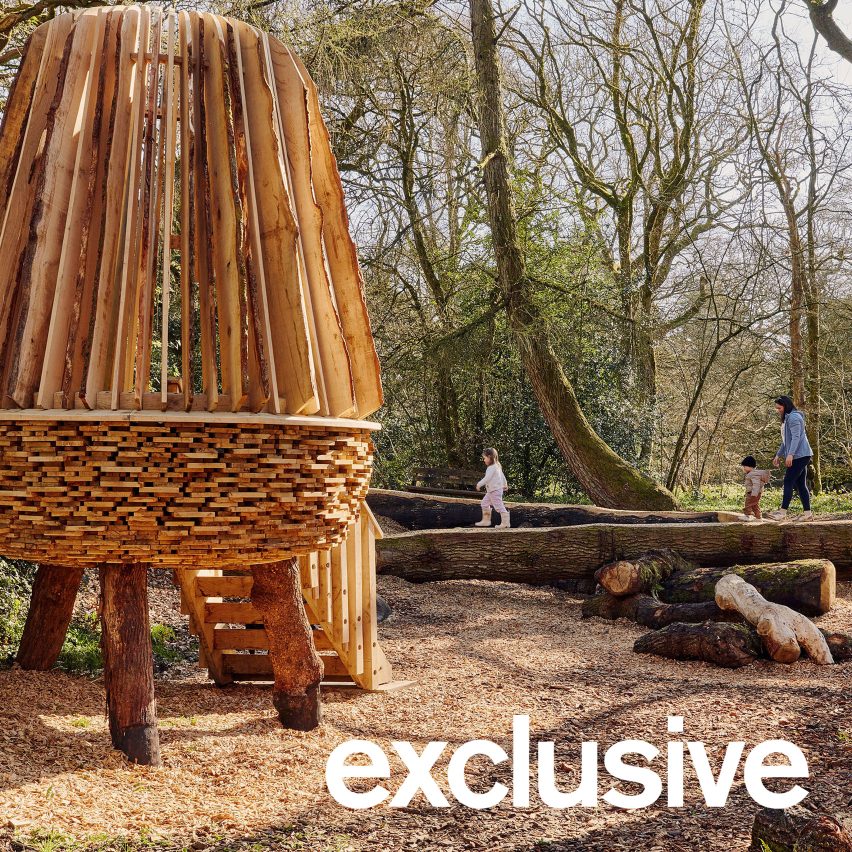
UK architecture firms Pearce+, Invisible Studio and Lean Structures have completed the Silk Wood Playscape in Gloucestershire, using oak from the surrounding forest to create “informal, unprogrammed” play structures.
Located within Westonbirt Arboretum’s ancient Silk Wood, the playscape occupies a hollow that was once a stone quarry, taking advantage of its gradually sloping topography.
Pearce+, Invisible Studio and Lean Structures wanted the design to feel like a natural extension of the woodland, combining strategically placed logs with several structures built using green oak from the surrounding arboretum.
“The existing play provision sits within the formal arboretum and is more conventional in nature, using bought-in timber play equipment that could belong to many woodland settings,” Pearce+ founder Owen Pearce told Dezeen.
“For Silk Wood, we wanted to create something much more specific to Westonbirt: an informal, unprogrammed playscape that felt closer to the experience of discovering a fallen tree in a forest as a child, and imagining it as anything you wanted it to be,” he added.
“The concept was about open-ended play, encouraging visitors to climb, balance, hide, explore and invent their own games, rather than prescribing a fixed route or activity.”
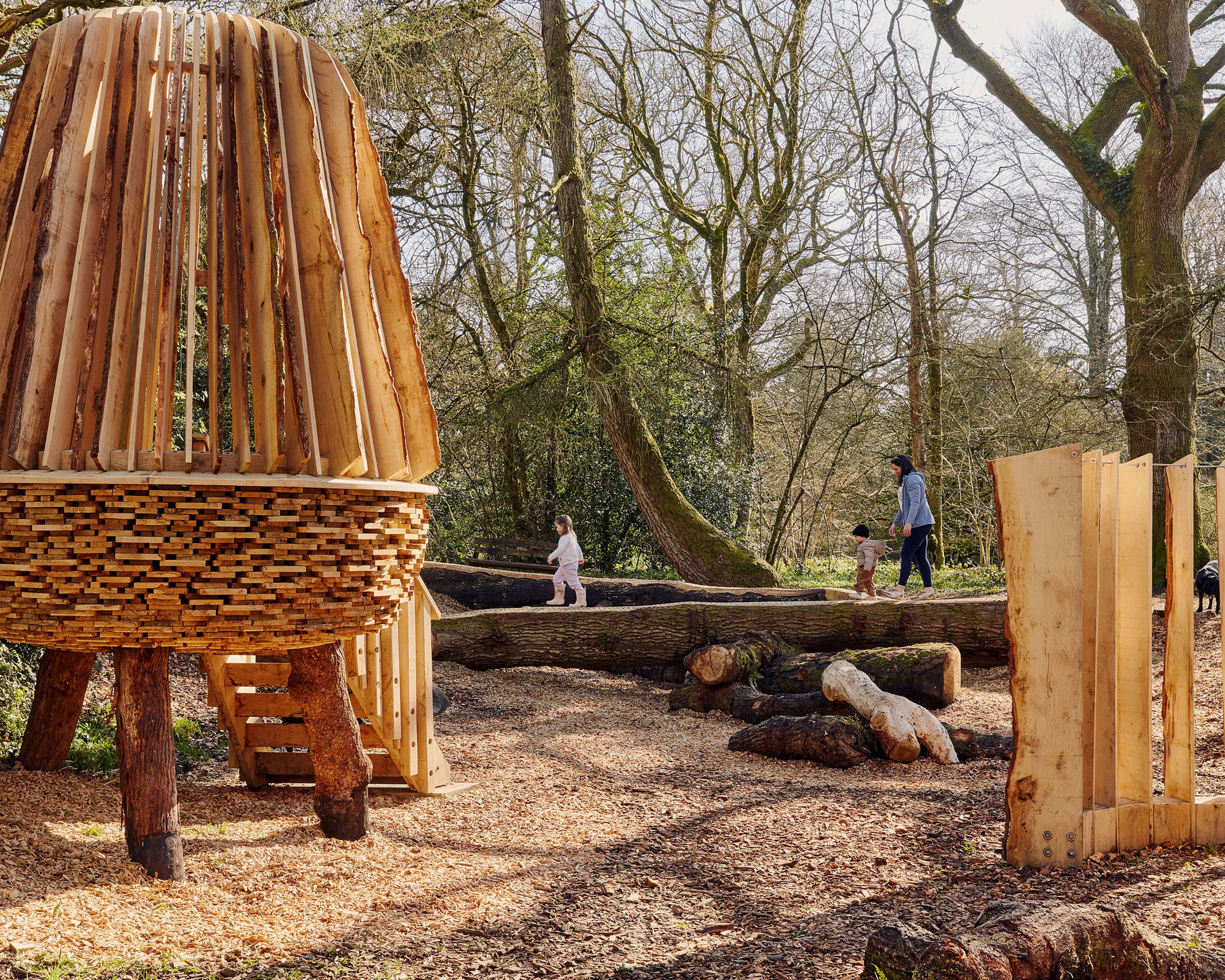
The Silk Wood Playscape combines a series of purpose-built structures with log bridges, scrambles and a hollow-trunk slide, positioned to mimic trees that might have fallen naturally.
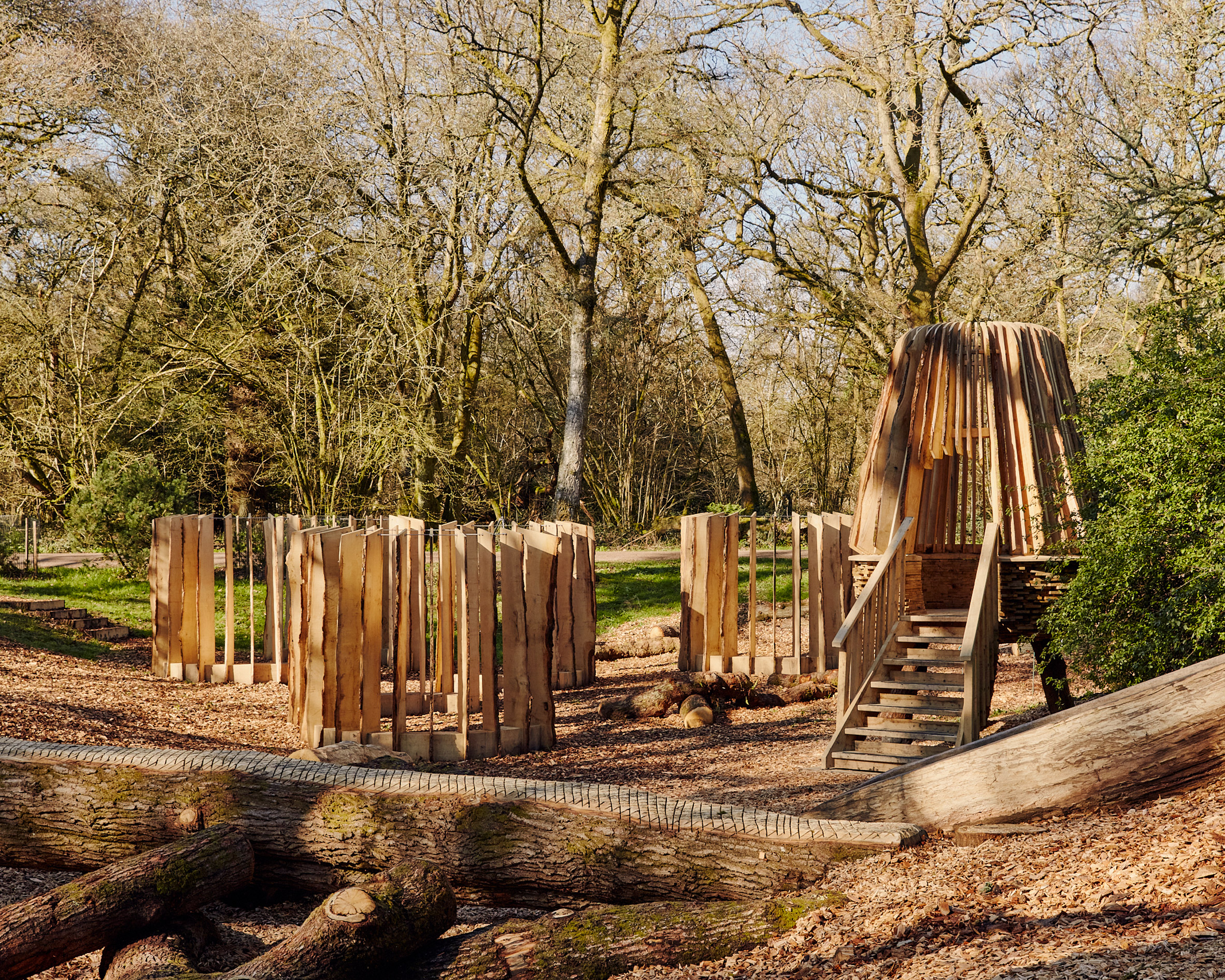
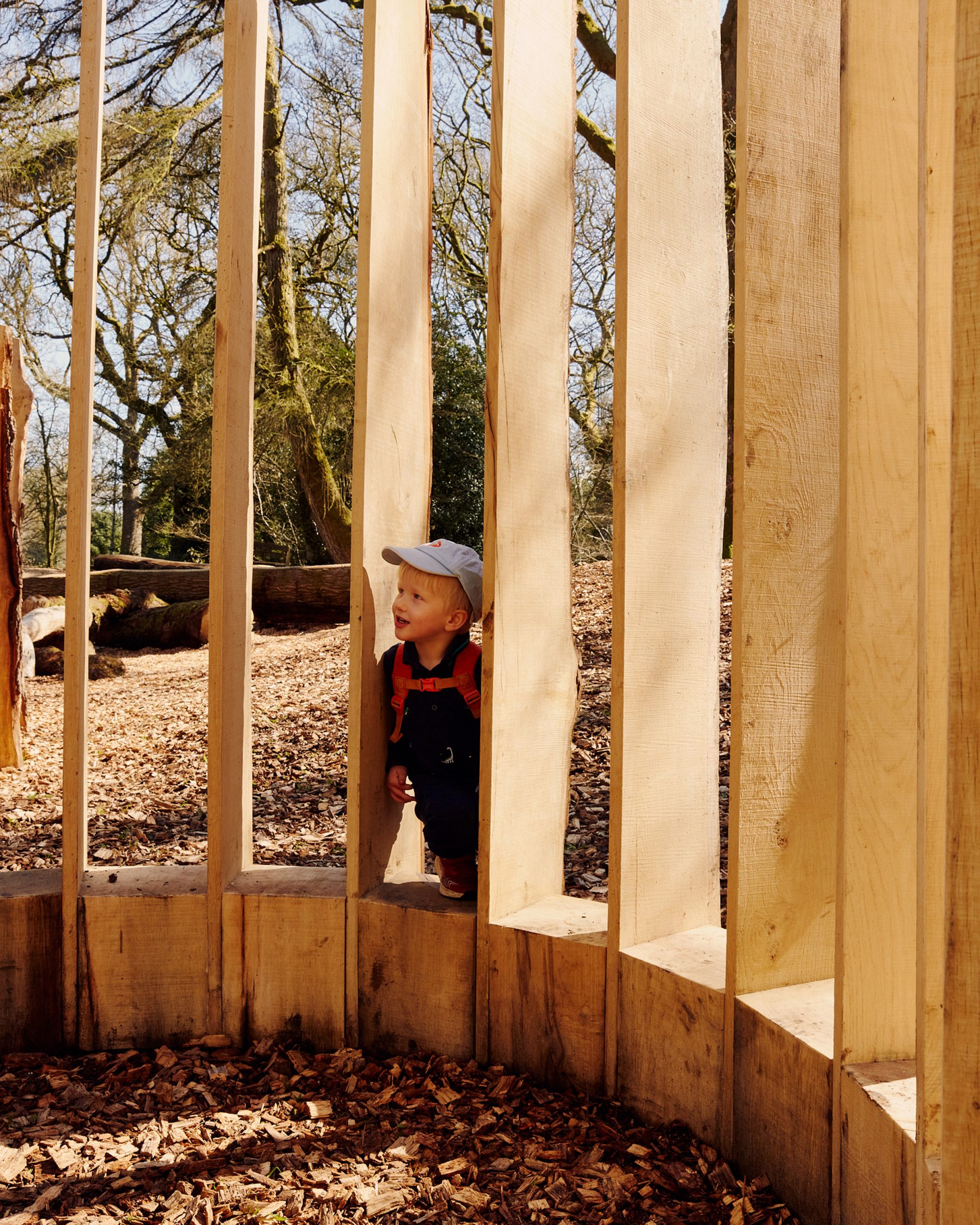
In the centre of the site is a series of curved “hide-and-seek walls” made from rows of vertical timber fins with their rough bark-covered edges left intact.
Alongside, a cone-shaped lookout tower wrapped in more timber fins surveys the playscape. Perched on three tree trunk legs, the base of this tower was created from stacked timber offcuts, between which small gaps create spaces for birds and insects to nest.
The design team’s commitment to using green oak from within the arboretum itself was celebrated by leaving its irregularities visible, save for where it has been smoothed down inside the watchtower to create a safe space for play.
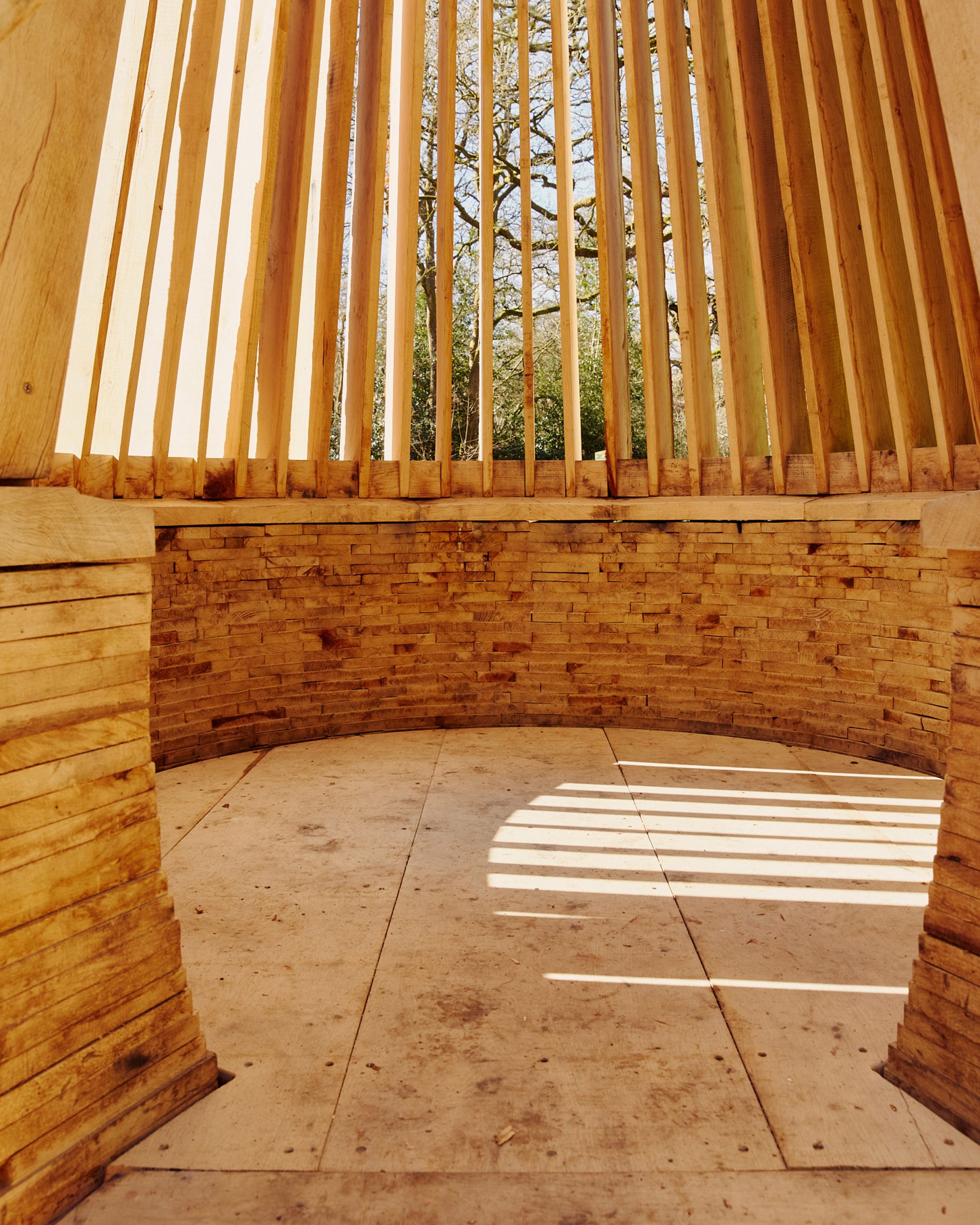
“These trees have been grown for biodiversity, collection value and natural character, not as commercial structural timber,” Pearce explained. “As a result, the material contains knots, bark, irregular forms, bends and imperfections that would normally be graded out or removed.”
“We chose to make these qualities central to the design. Bark was left on where appropriate, wonky limbs were incorporated, and offcuts were reused in the tower and other elements,” he added.
Pearce+ and Invisible Studio previously collaborated on a mushroom-like woodworking pavilion for Westonbirt Arboretum, which is supported by tree trunk legs and topped by a domed roof of aluminium shingles.
Other play areas recently featured on Dezeen include a space-themed playscape for a Belgian arts campus by fashion designer Walter Van Beirendonck, and a colourful sports park in China informed by local opera costumes.
The photography is by Joseph Horton.
The post Woodland playscape in Gloucestershire crafted from surrounding trees appeared first on Dezeen.